
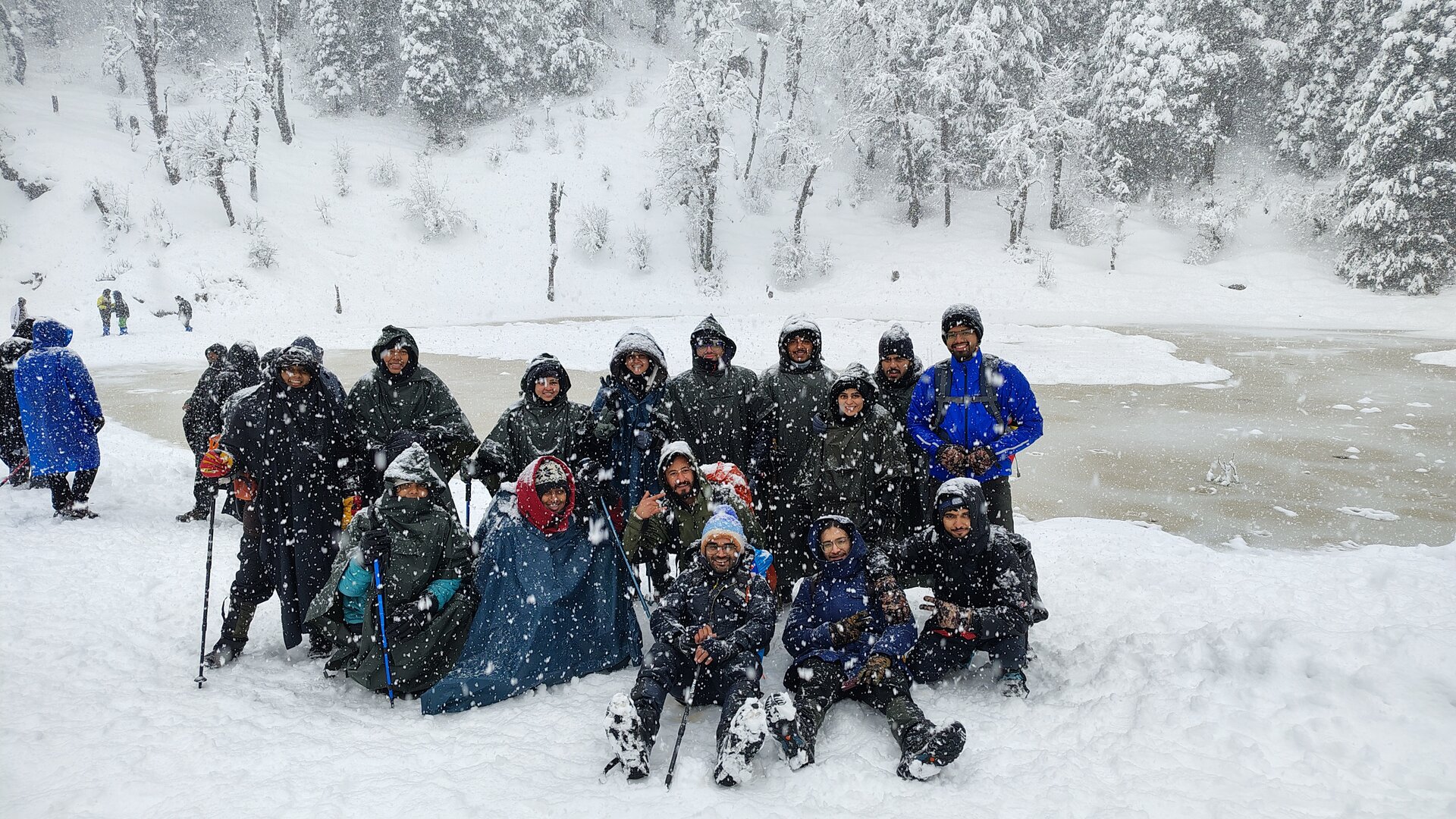
There is a moment in the Himalayas when the landscape seems to become almost impossibly quiet. The last colours of autumn disappear. The forests begin holding snow between their branches. Alpine meadows vanish beneath white. Mountain lakes freeze at altitude. Streams continue flowing beneath layers of ice. And the familiar trails of summer become something entirely different.
This is winter in the Indian Himalayas.
For trekkers, winter is not simply another season to walk through the mountains. It is a completely different way of experiencing them. The same trail that feels green and open during summer can become a silent corridor through snow-covered forests in January. A familiar meadow can transform into an enormous white landscape. A summit that looked inviting in autumn can suddenly demand much more from the person climbing it. And somewhere between the cold, the snow, the early sunsets and the extraordinary clarity of winter skies lies a Himalayan experience that is unlike anything the warmer months can offer.
But winter trekking also requires more preparation. Snow changes the difficulty of a trail. Cold changes how your body performs. Shorter daylight changes the pace of an expedition. Weather systems can alter plans quickly. And a trek that appears easy on paper may feel significantly harder once snow covers the trail.
That is why choosing the right winter trek is not simply about asking where you can find the most snow. It is about understanding the terrain, altitude, season, weather, experience required and the kind of winter experience you actually want.
💡 The best winter trek is not necessarily the snowiest trek. It is the trek whose terrain, altitude, snow conditions and difficulty match your experience, preparation and expectations.
In this guide, we'll explore the finest winter trekking experiences across the Indian Himalayas, understand how December differs from January and February, look at the best routes for beginners and experienced trekkers, and explain what you should know before stepping onto a Himalayan trail covered in snow.
Because winter in the Himalayas deserves more than a list. It deserves to be understood.
❄️ What Makes Winter Trekking in the Himalayas So Special?
Winter changes almost everything about a mountain landscape.
During the warmer months, Himalayan trails are defined by movement and colour. Rivers rush through valleys. Meadows turn green. Wildflowers appear across alpine slopes. Villages remain active and high-altitude grazing grounds come alive.
Winter slowly removes all of this visual noise. Snow simplifies the landscape. Dark forests contrast sharply against white slopes. Mountain ridges become more pronounced. Distant peaks often appear extraordinarily sharp against deep blue skies. Even familiar landscapes begin feeling remote.
One of the greatest attractions of winter trekking is therefore not simply snowfall. It is transformation. A trekker who has walked the Himalayas during summer may return to the same region in January and barely recognise the trail.
That is the magic of a true winter trek.
🌨️ Why Winter Snow is Different from Snow at High Altitude
There is an important distinction between seeing snow in the Himalayas and actually undertaking a winter snow trek.
During summer, trekkers may encounter snowfields at 14,000 or 15,000 feet on high-altitude expeditions.
Winter brings snow much lower.
Trails that remain completely snow-free during the warmer months can become snow-covered at elevations around 9,000 to 12,000 feet.
This is what makes classic winter treks such as Kedarkantha, Brahmatal, Dayara Bugyal and Deoriatal–Chandrashila so special.
You do not necessarily need to climb to extreme expedition altitudes to experience a landscape buried beneath snow.
Winter brings the snow to you.
📅 December vs January vs February vs March
| Month | Typical Winter Character | Best For |
|---|---|---|
| December | Beginning of winter, fresh snowfall, developing snow cover, crisp skies | Trekkers looking for early-season snow and comparatively easier trail conditions |
| January | Deep winter, established snow cover, frozen lakes and snow-covered forests | Classic Himalayan snow trekking |
| February | Peak winter atmosphere, deep snow on many routes, cold nights and excellent visibility | Trekkers seeking a deeper winter experience |
| March & April | Winter gradually transitions toward spring, snow begins retreating from lower elevations | Last winter-snow experiences and trekkers wanting a transition between seasons |
These are broad seasonal patterns rather than guarantees.
The amount of snow a trek receives depends on the year's weather systems, altitude, slope orientation, local geography and the timing of individual snowfalls.
That means two winter seasons can look surprisingly different even on the same trail.
🏔️ The Best Winter Treks in the Indian Himalayas
There is no single trek that represents winter in its entirety. Some routes are famous for deep snow. Others are defined by mountain views. Some offer frozen lakes. Others combine snow-covered forests with a rewarding summit climb. And some provide a gentler introduction to winter trekking without taking trekkers deep into high-altitude terrain.
The following treks represent some of the most established winter trekking experiences across the Indian Himalayas.
Dayara Bugyal Trek
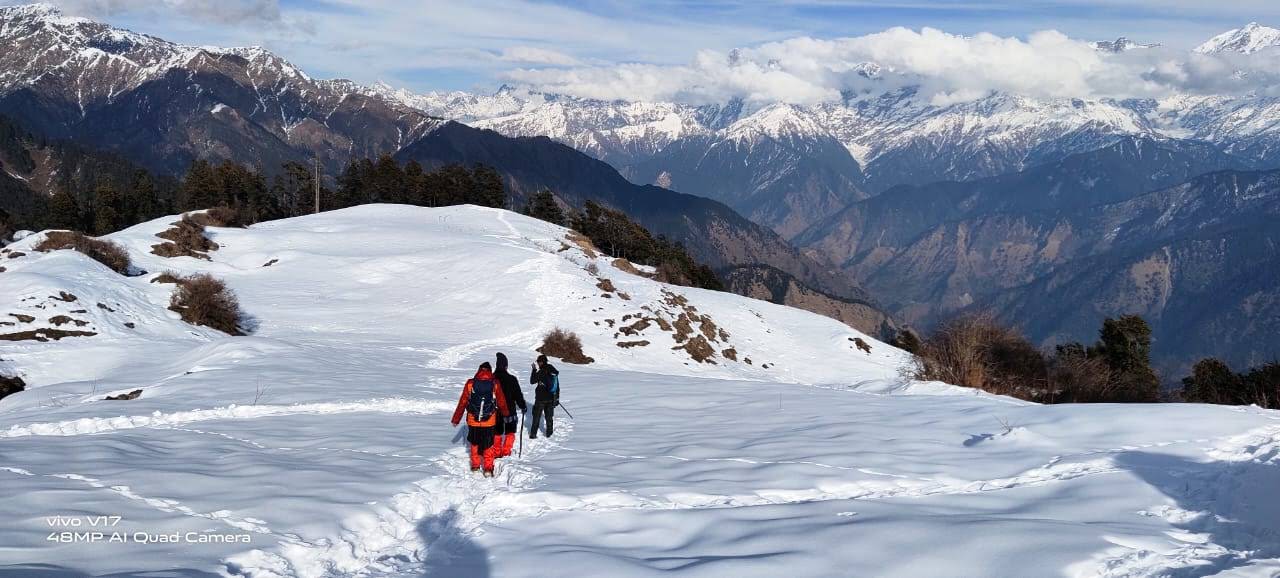

⏳ 5N/6D | ⚡ Easy–Moderate | 🏔️ Approx. 12,000 ft | 📍 Uttarkashi, Uttarakhand
Dayara Bugyal is one of the most beautiful examples of how dramatically the Himalayas can transform in winter.
During the warmer months, its enormous alpine meadows spread across rolling green slopes. Come winter, the same landscape disappears beneath snow and becomes a vast white wilderness framed by some of the finest mountain views in Uttarakhand.
The trail passes through forests, open meadows and traditional mountain landscapes before reaching the higher reaches of Dayara.
Its relatively gentle terrain makes it an excellent introduction to Himalayan winter trekking, although snow naturally makes the trail more demanding than it is in other seasons.
Winter also brings a completely different atmosphere to the meadows. Pine and oak forests become quieter, campsites feel more remote, and the surrounding peaks stand out dramatically against the winter sky.
Ideal for: First-time winter trekkers, families with appropriate preparation, photographers and trekkers looking for a beautiful snow-covered meadow experience without an extreme altitude profile.
📖 Planning the trek? Read our Complete Dayara Bugyal Trek Guide.
Brahmatal Trek
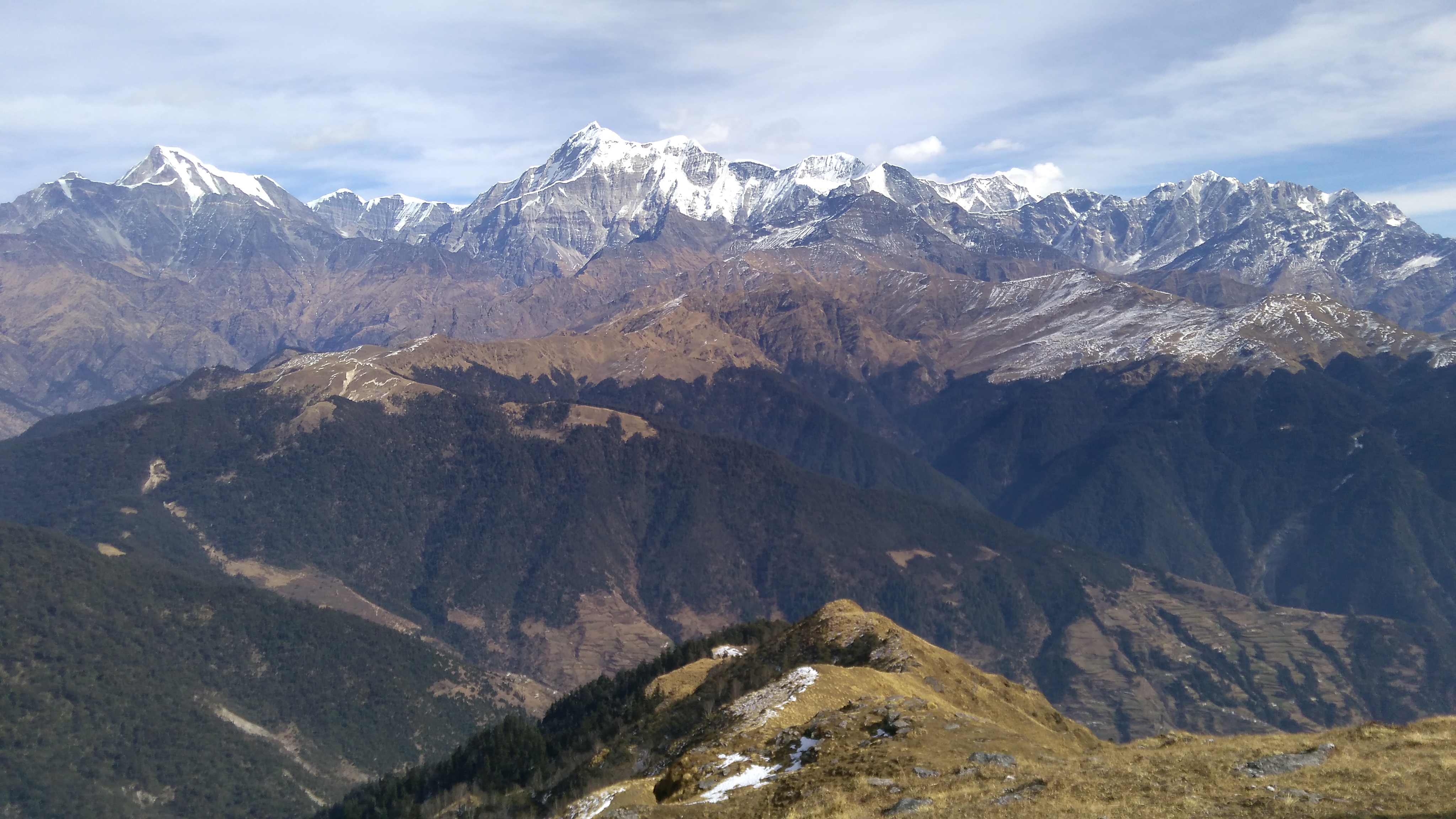
⏳ 5N/6D | ⚡ Easy–Moderate | 🏔️ Approx. 12,200 ft | 📍 Chamoli, Uttarakhand
Brahmatal is one of the classic winter trails of Uttarakhand, particularly known for the combination of snow-covered forests, alpine terrain, a high-altitude lake and expansive Himalayan views.
As winter deepens, the landscape around Brahmatal can become heavily snow-covered. The lake itself may freeze, while the surrounding slopes turn into a continuous winter landscape.
The trek also offers impressive views of major Himalayan peaks, including Trishul and Nanda Ghunti, making the journey as much about the mountain panorama as it is about the snow.
The climb becomes more demanding once snow accumulates, particularly on steeper sections. This is why physical preparation remains important even though the trek is commonly considered suitable for beginners with appropriate preparation.
Ideal for: Trekkers looking for a classic snow trek with frozen-lake scenery, mountain views and a stronger winter atmosphere.
📖 Discover the route in our Complete Brahmatal Trek Guide.
Kedarkantha Trek
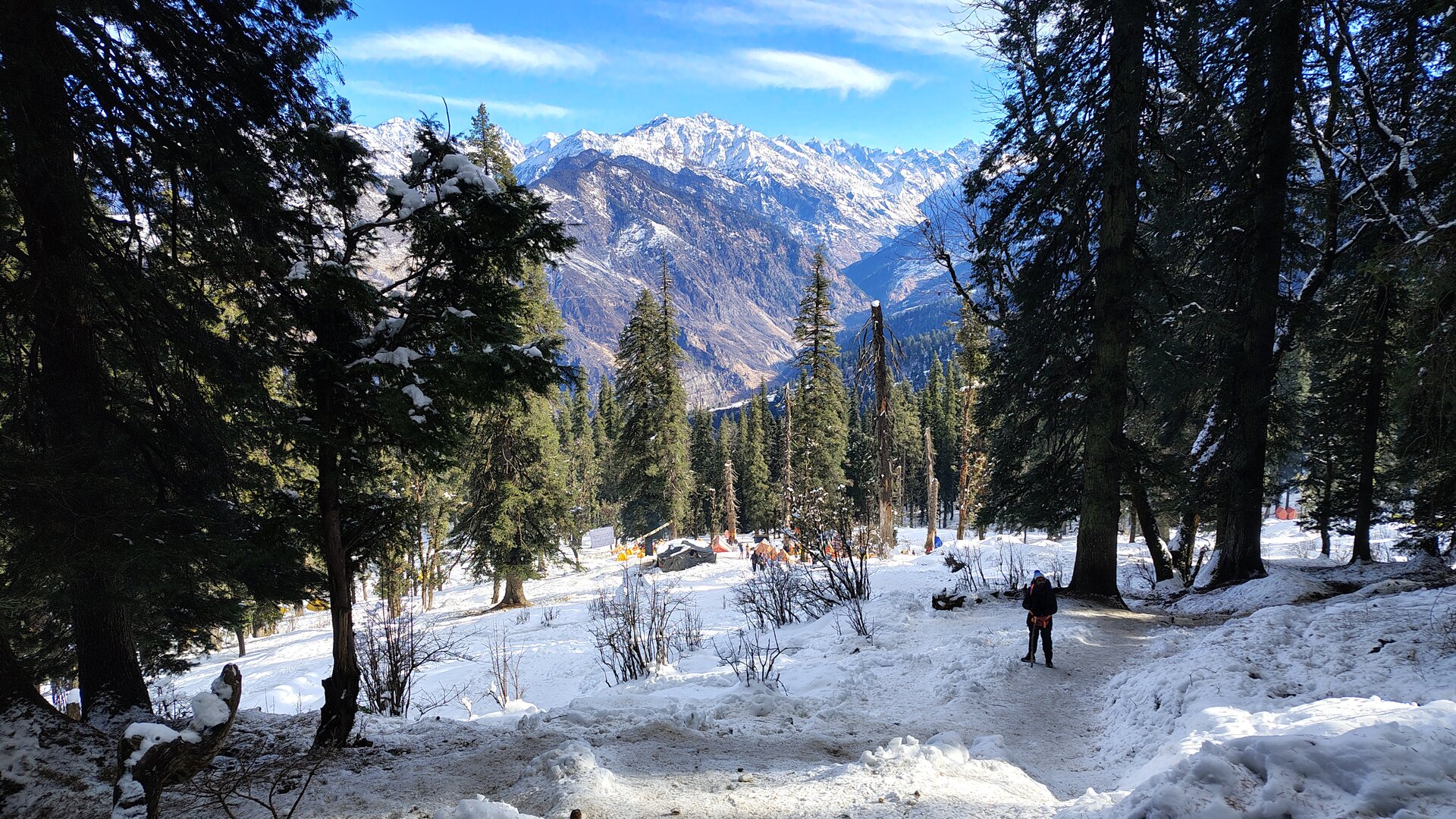
⏳ 5N/6D | ⚡ Easy–Moderate | 🏔️ Approx. 12,500 ft | 📍 Uttarkashi, Uttarakhand
Kedarkantha has become closely associated with the idea of Himalayan winter trekking.
The route combines pine and oak forests, open snowfields, beautiful campsites and a defined summit climb, creating a journey that feels distinctly Himalayan without requiring an expedition-level itinerary.
In winter, snow transforms the lower forests and meadows while the summit approach becomes the defining challenge of the trek.
The final climb is exposed compared with the forest sections below, and the combination of altitude, cold and snow makes the summit day physically demanding.
What makes Kedarkantha particularly appealing is the sense of progression. The landscape gradually changes from forest to open mountain terrain, culminating in a summit that provides broad views of surrounding Himalayan ranges.
Ideal for: Trekkers wanting a structured first high-altitude winter adventure with forests, snow camps and a proper summit experience.
📖 Before you go, read our Complete Kedarkantha Trek Guide.
Deoriatal–Chandrashila Trek
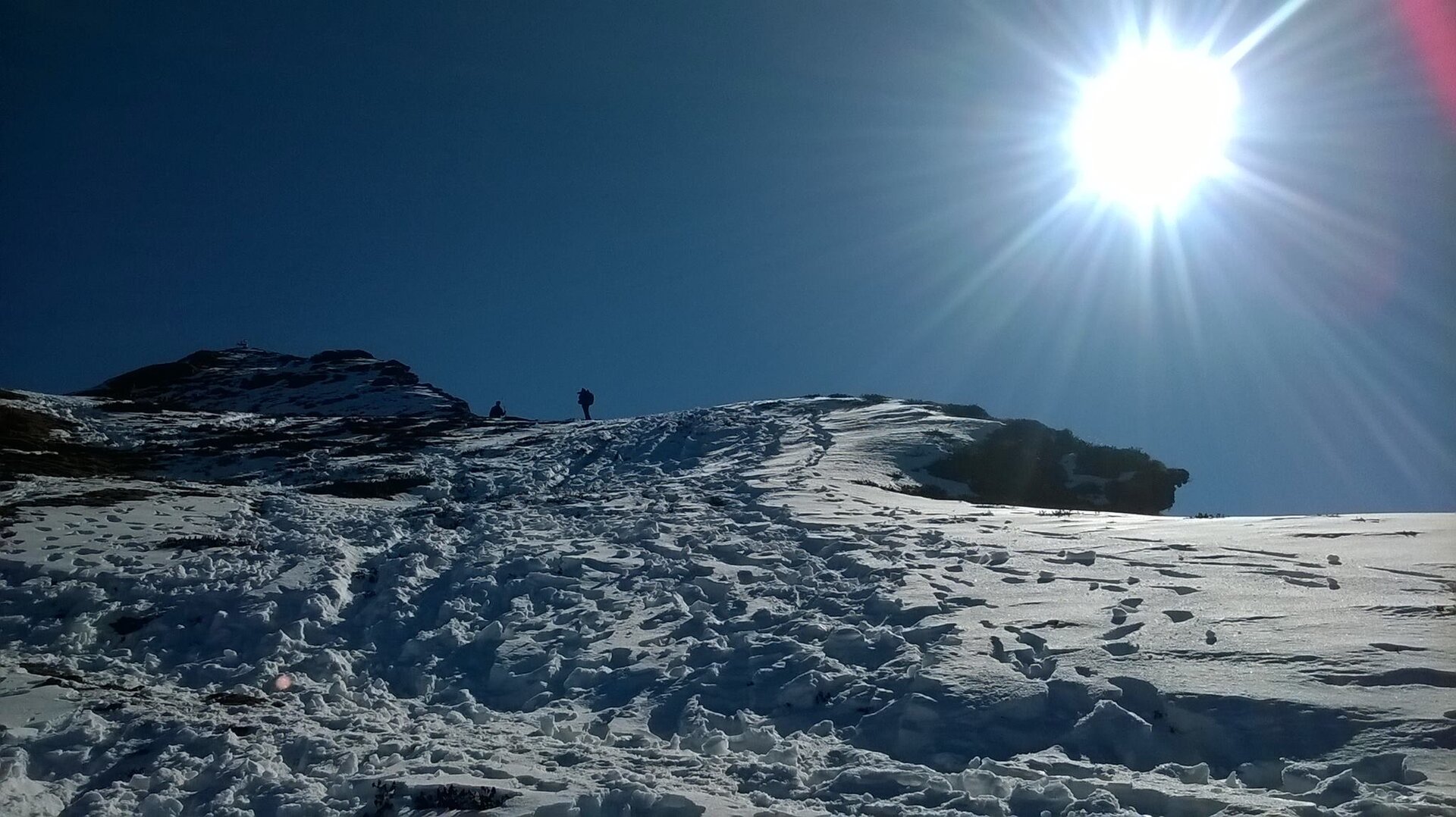
⏳ 5N/6D | ⚡ Easy–Moderate | 🏔️ Approx. 12,000 ft | 📍 Rudraprayag, Uttarakhand
Few winter treks combine forest, lake, temple, summit and panoramic mountain scenery as naturally as the Deoriatal–Chandrashila route.
The journey begins around Sari and Deoriatal before climbing through forested terrain toward Tungnath and eventually Chandrashila.
Winter changes the entire character of the trail.
Snow settles through the forests and around the higher reaches, while the final climb toward Chandrashila becomes a stark white ascent with enormous Himalayan views opening from the summit.
The route is particularly rewarding for trekkers who want a winter landscape without spending several days deep inside a remote high-altitude expedition.
Weather can change quickly at the summit, however, and snow-covered terrain should never be treated as equivalent to the easier conditions found during the warmer months.
Ideal for: Beginners and intermediate trekkers looking for a compact winter adventure combining forests, a Himalayan lake, a sacred temple and a summit viewpoint.
📖 Explore the full route in our Complete Deoriatal–Chandrashila Trek Guide.
Kuari Pass Trek
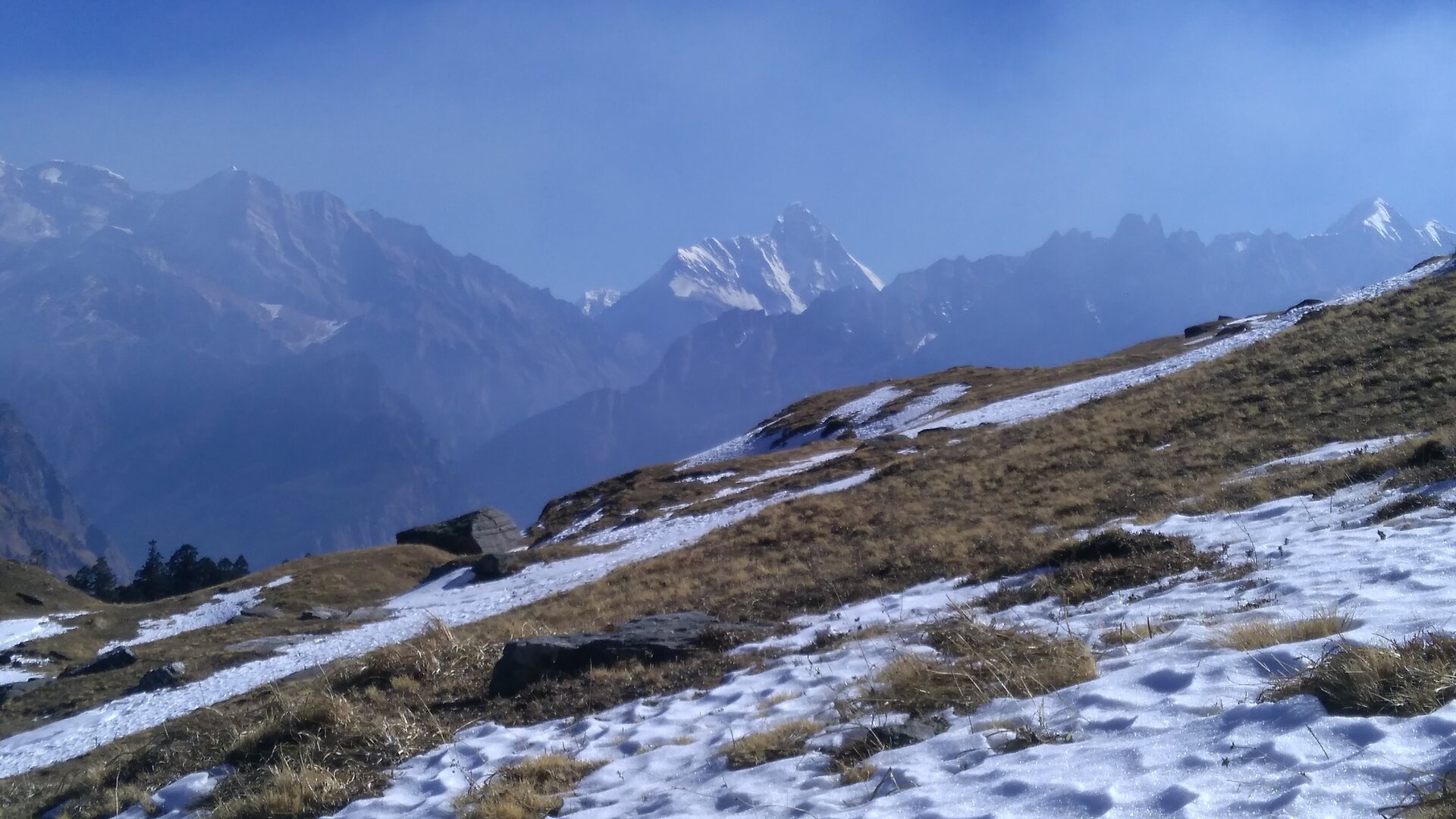
⏳ 5N/6D | ⚡ Easy–Moderate | 🏔️ Approx. 12,500 ft | 📍 Chamoli, Uttarakhand
Kuari Pass is one of the great viewpoint treks of the Garhwal Himalayas.
The trail moves through beautiful Himalayan forests and open ridges before reaching terrain from which some of the region's most celebrated peaks dominate the horizon.
In winter, snow transforms the oak forests and high ridges into a completely different landscape.
The attraction here is not only the snow beneath your boots but the scale of the mountains around you.
On clear winter days, the views toward Nanda Devi, Dronagiri, Kamet and other major Himalayan peaks create an extraordinary sense of depth and scale.
As snowfall increases, the same route becomes considerably more demanding, particularly where trail markings are obscured and snow accumulation is deeper.
Ideal for: Trekkers who value panoramic mountain views as much as snow and want a winter trek with a classic Garhwal landscape.
📖 Read our Complete Kuari Pass Trek Guide before planning your journey.
Sandakphu Trek
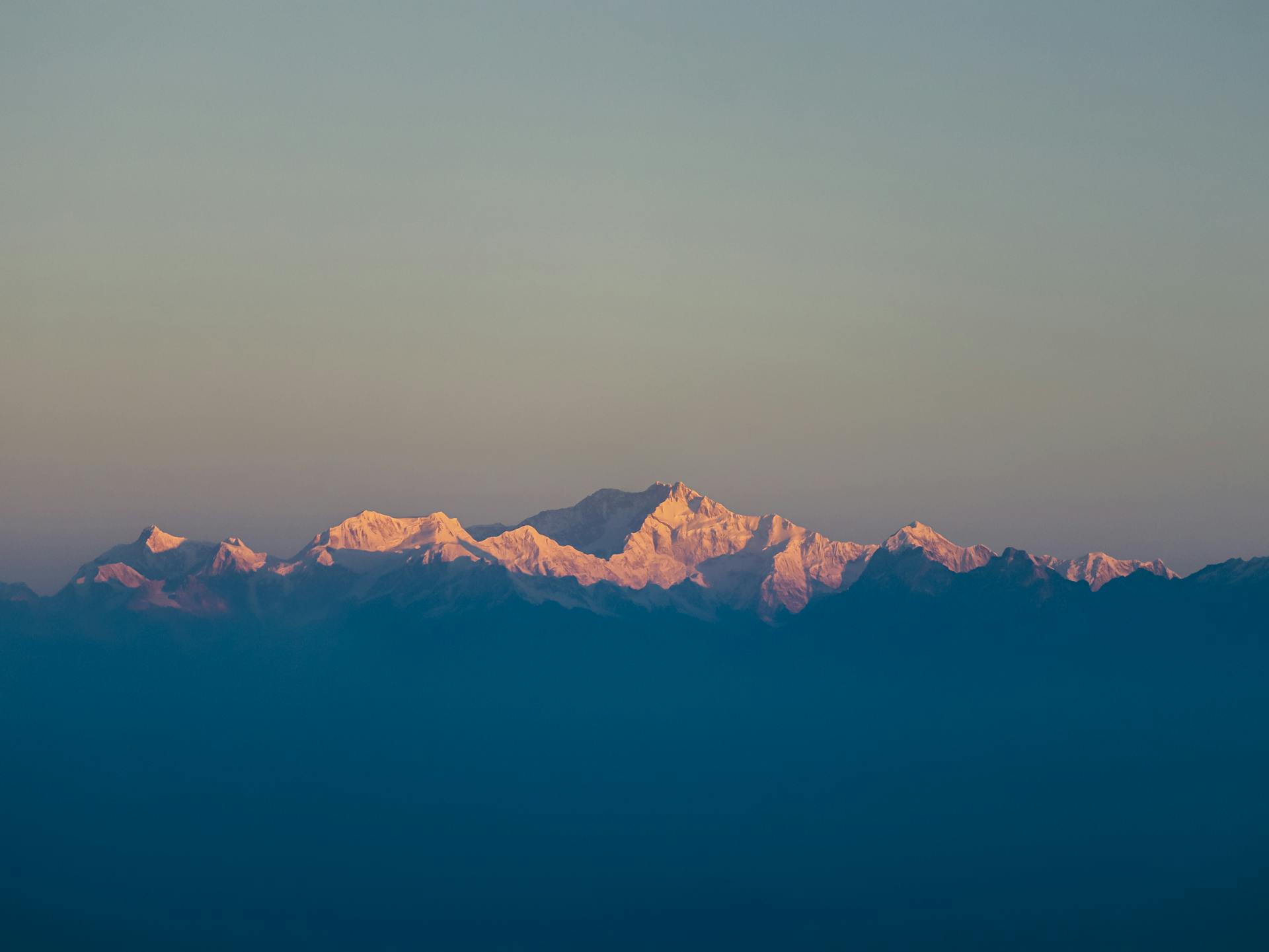
⏳ 6N/7D | ⚡ Moderate | 🏔️ Approx. 11,930 ft | 📍 Singalila Range, West Bengal
Winter trekking in India does not begin and end with Uttarakhand.
In the far east of the country, the Singalila Range offers an entirely different Himalayan experience.
Sandakphu is the highest point in West Bengal and is famous for its extraordinary mountain panorama. On exceptionally clear days, the horizon can reveal four of the world's highest mountains—Everest, Kanchenjunga, Lhotse and Makalu.
Winter brings cold, clear conditions and the possibility of snow across the higher sections of the trail.
The cultural character is also different from the classic Uttarakhand snow treks. Villages, mountain lodges and the trail's proximity to the India–Nepal border create a journey that feels distinctly eastern Himalayan.
Snow conditions here can differ considerably from those in Uttarakhand, so trekkers should plan according to current trail and weather conditions rather than assuming a uniform winter landscape.
Ideal for: Trekkers looking for spectacular Himalayan panoramas, eastern Himalayan culture and a winter experience beyond Uttarakhand.
📖 Explore the route through our Complete Sandakphu Trek Guide.
Ali Bedni Bugyal Trek
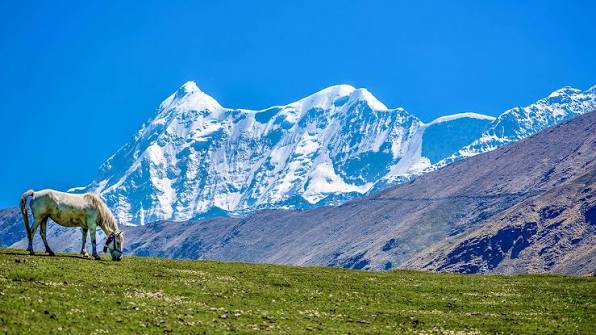
⏳ 4N/5D | ⚡ Easy–Moderate | 🏔️ Approx. 12,500 ft | 📍 Chamoli, Uttarakhand
Ali Bedni Bugyal is one of those Himalayan landscapes that becomes almost unrecognisable under snow.
During the warmer months, the twin meadows of Ali and Bedni spread across enormous rolling slopes beneath the high peaks of the Garhwal Himalayas.
Winter strips away the greens and replaces them with an immense white landscape.
The surrounding forests become quieter, the meadows lose their visual boundaries, and the great Himalayan peaks appear to rise directly from the snow-covered terrain.
Because the route reaches considerable altitude and winter conditions can become demanding, this should not be approached simply as an easy sightseeing walk.
Snow depth and local access conditions also vary significantly from year to year.
Ideal for: Trekkers seeking expansive alpine landscapes, dramatic mountain views and a quieter winter alternative to some of the more heavily travelled snow routes.
📖 Learn more in our Complete Ali Bedni Bugyal Trek Guide.
Winter Markha Valley Trek
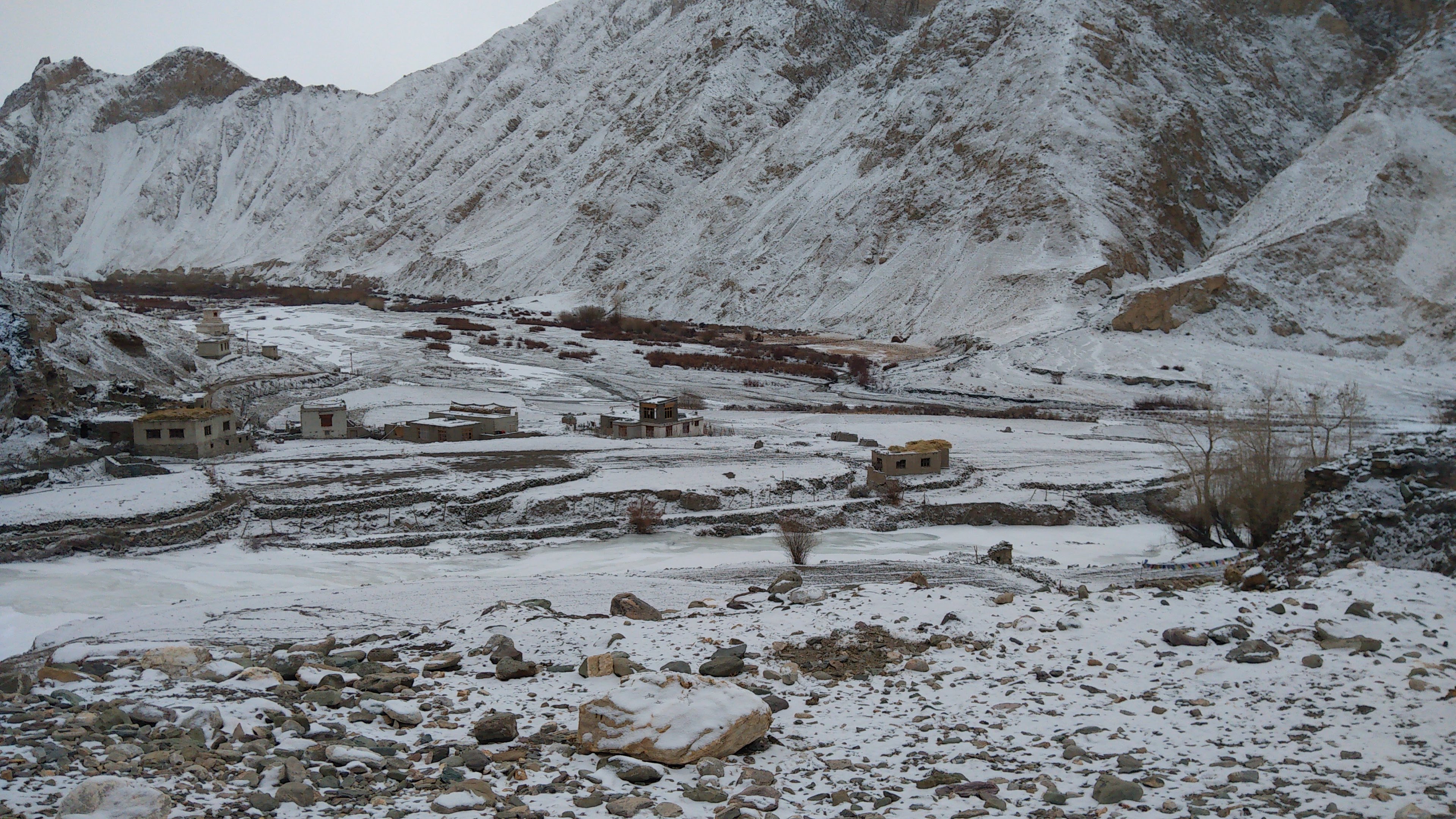
⏳ 6N/7D | ⚡ Moderate–Difficult | 🏔️ Approx. 17,000 ft | 📍 Ladakh
Winter transforms the Markha Valley into a stark and deeply quiet landscape, far removed from the more familiar summer character of Ladakh.
The dry mountains turn almost monochromatic under snow, while frozen streams, snow-covered villages and vast open valleys create a completely different trekking experience.
As the trail gains altitude, the surrounding peaks and high mountain passes become increasingly dramatic against the winter sky.
However, winter Markha Valley is a serious high-altitude trek. Sub-zero temperatures, snow-covered trails, frozen water sources and rapidly changing mountain conditions can make sections considerably more demanding than they appear.
Route conditions can also vary significantly depending on snowfall and local winter accessibility.
Ideal for: Experienced trekkers looking for a demanding winter Himalayan experience, dramatic high-altitude landscapes and the solitude of Ladakh's quieter season.
📖 Learn more in our Complete Winter Markha Valley Trek Guide.
Winter Dzongri Trek
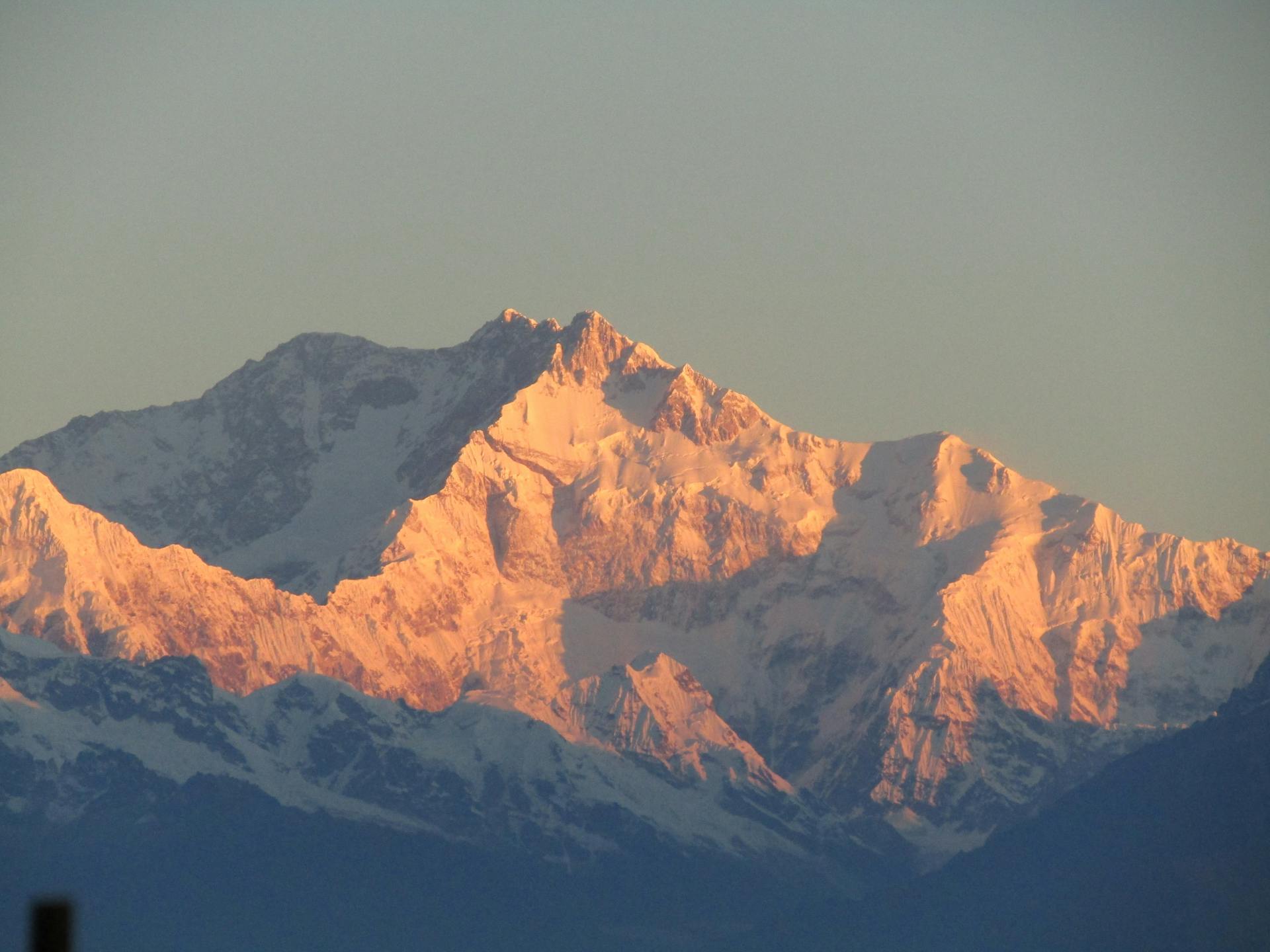
⏳ 5N/6D | ⚡ Moderate–Difficult | 🏔️ Approx. 13,800 ft | 📍 Sikkim
Winter gives the Dzongri trail a completely different character, covering the forests, meadows and mountain ridges of the route in snow.
The trail passes through the beautiful landscapes of western Sikkim, gradually climbing towards Dzongri and its spectacular viewpoints of the surrounding Himalayan peaks.
In winter, the familiar green meadows disappear beneath snow and the forests become noticeably quieter, creating a more secluded mountain experience.
The highlight is the panoramic Himalayan view from Dzongri, where peaks such as Kangchenjunga dominate the skyline on clear days.
Snow and freezing temperatures can make the higher sections considerably more demanding, while trail conditions may change substantially with each winter's snowfall.
Ideal for: Trekkers who want a quieter winter Himalayan experience with forests, snow-covered meadows and some of Sikkim's most impressive mountain views.
📖 Learn more in our Complete Winter Dzongri Trek Guide.
Gulabi Kantha Trek
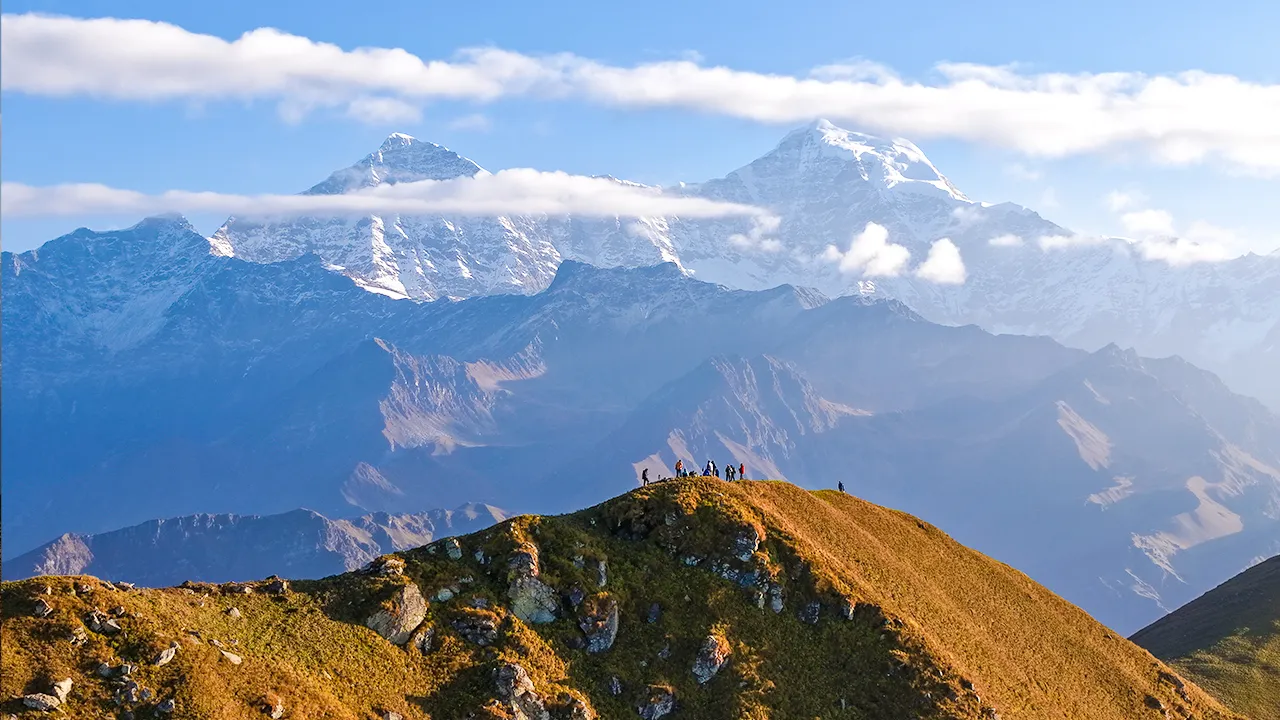
⏳ 4N/5D | ⚡ Easy–Moderate | 🏔️ Approx. 12,500 ft | 📍 Uttarkashi, Uttarakhand
Gulabi Kantha becomes a beautiful snow-covered landscape during winter, with open meadows, forests and Himalayan ridges taking on a distinctly different character.
The trail gradually climbs through dense mountain forests before opening into broad alpine meadows, where fresh snow can transform the landscape into a vast white expanse.
On clear days, the higher sections offer views towards the surrounding Himalayan ranges, while the quieter winter trails provide a more secluded trekking experience.
Despite its relatively accessible nature, winter conditions can make the trek more demanding. Snow accumulation, freezing temperatures and changing trail conditions should all be taken seriously.
Exact snow conditions vary from season to season, particularly around the higher meadows.
Ideal for: Trekkers looking for a relatively accessible winter trek with snow-covered meadows, forest trails, mountain views and a quieter Himalayan atmosphere.
📖 Learn more in our Complete Gulabi Kantha Trek Guide.
🌲 What About Short Winter Treks?
Not every winter adventure needs to involve several days at high altitude.
For trekkers who have limited time, shorter Himalayan routes can offer a gentler introduction to winter mountain conditions while still providing the experience of walking through forests, meadows and mountain landscapes.
Nag Tibba Trek
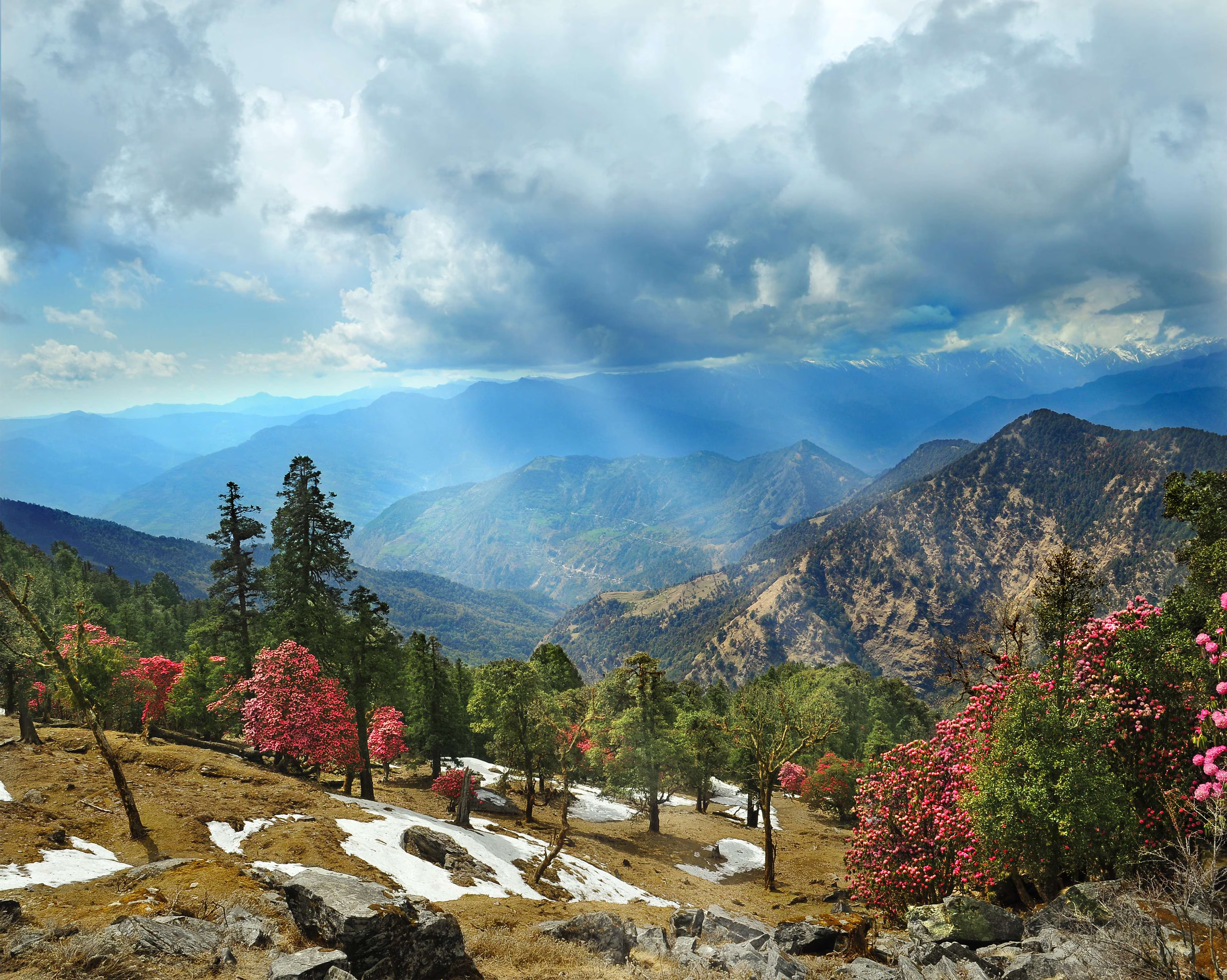
⏳ Short Trek | ⚡ Easy | 🏔️ Approx. 9,900 ft | 📍 Tehri Garhwal, Uttarakhand
Nag Tibba is one of the more accessible short Himalayan treks, making it a practical option for trekkers who want a mountain escape without committing several days to a high-altitude journey.
The trail passes through Himalayan forests before reaching open sections with views across the surrounding Garhwal mountains.
Winter can bring a completely different character to the trail, with cold forest paths and occasional snowfall transforming the landscape.
However, because Nag Tibba sits at a considerably lower altitude than the major winter snow treks, snowfall is not guaranteed simply because it is winter.
Conditions can change from one season to another, so the experience may range from snow-covered trails to a cold, clear Himalayan walk without significant snow.
Ideal for: First-time trekkers, short weekend escapes and anyone looking to experience Himalayan winter conditions without committing to a longer high-altitude trek.
📖 Learn more in our Complete Nag Tibba Trek Guide.
Dhakuri Pass Trek
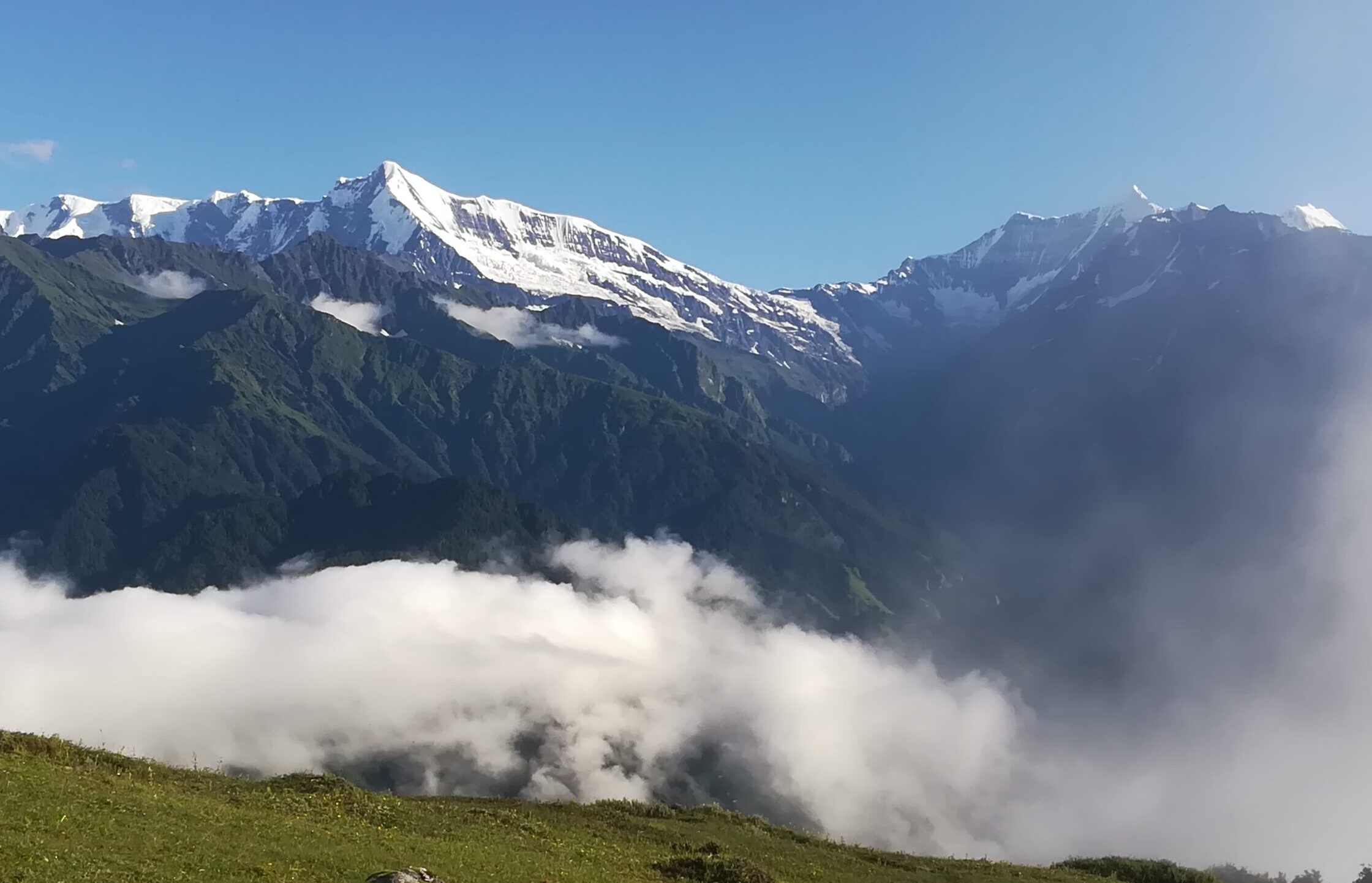
⏳ 4N/5D | ⚡ Easy | 🏔️ Approx. 10,800 ft | 📍 Kumaon, Uttarakhand
The Dhakuri Pass Trek is a peaceful Kumaon trail that combines forest paths, traditional mountain villages, open meadows and broad Himalayan views.
The route climbs through oak, pine and rhododendron forests before opening towards the Dhakuri meadows, with the higher Chiltha Mata Temple Top providing a sweeping Himalayan panorama.
Winter gives the landscape a quieter character. Forests can turn cold and misty, while snowfall can occasionally cover the meadows and higher sections in white.
Snow conditions are not fixed, however, and the amount of snowfall can vary considerably between seasons.
With its relatively gentle character and lower maximum altitude compared with many dedicated winter snow treks, Dhakuri can be an appealing option for trekkers looking for a quieter Himalayan experience.
Ideal for: First-time trekkers, families and anyone looking for a peaceful winter journey through the Kumaon Himalayas without the demands of a long high-altitude trek.
📖 Learn more in our Complete Dhakuri Pass Trek Guide.
Khaliya Top Trek
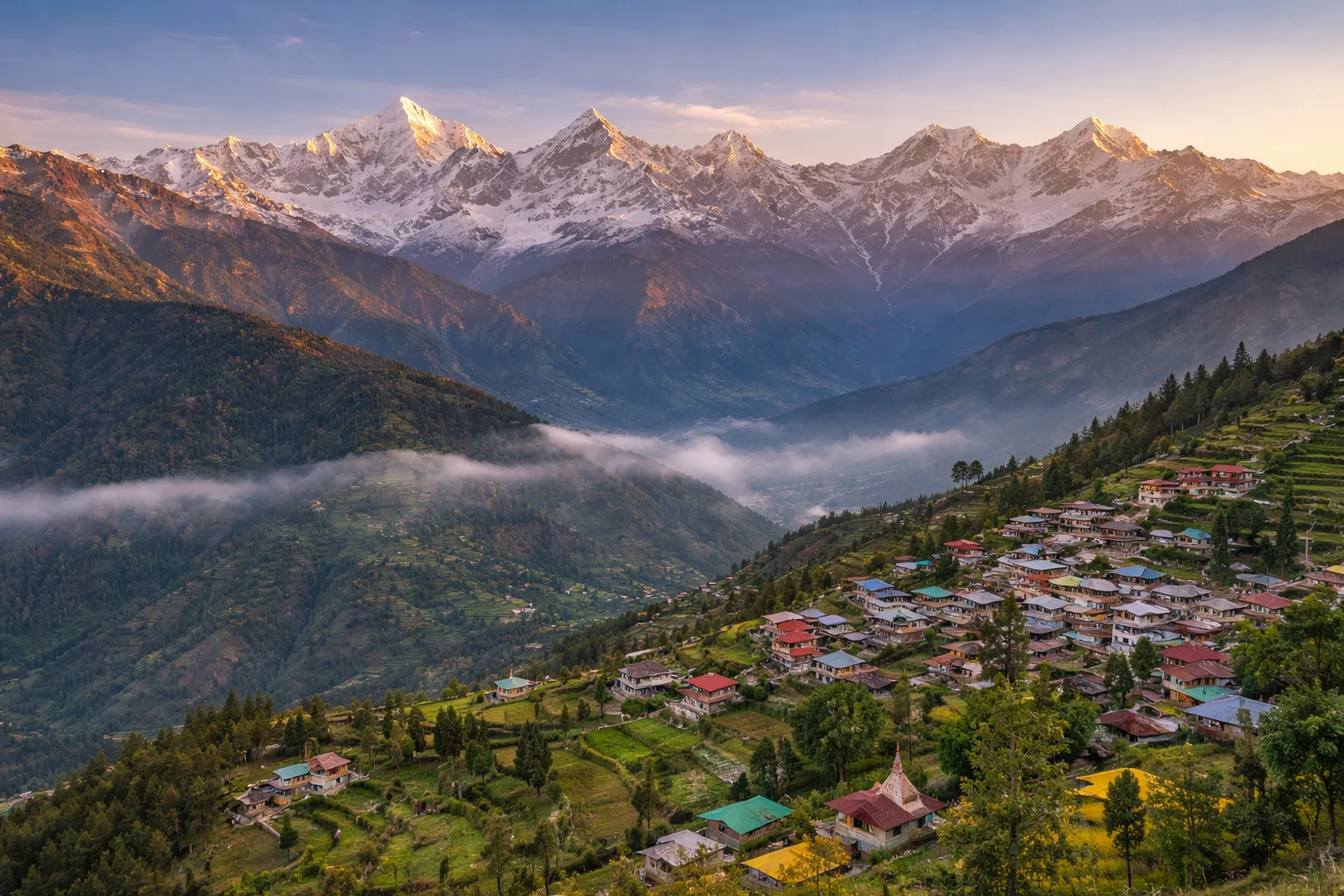
⏳ 2N/3D | ⚡ Easy | 🏔️ Approx. 11,500 ft | 📍 Munsiyari, Kumaon, Uttarakhand
The Khaliya Top Trek is one of Kumaon's rewarding short treks, combining oak and rhododendron forests with expansive alpine meadows and close views of the Panchachuli range.
As the trail climbs above Munsiyari, the forest gradually opens into the broad landscapes of Khaliya Bugyal, where the surrounding Himalayan peaks become increasingly prominent.
Winter can transform these meadows into a snow-covered landscape, making Khaliya Top particularly appealing to trekkers looking for a shorter winter experience.
But, as with any lower-altitude winter route, snowfall should not be assumed for every departure. Actual snow conditions depend on the season's snowfall and temperatures.
The combination of a short itinerary, open mountain landscapes and dramatic views makes it a particularly attractive option when you want a winter Himalayan experience without spending a week on the trail.
Ideal for: First-time trekkers, families, photographers and anyone looking for a short Himalayan trek with alpine meadows, possible winter snow and spectacular Kumaon mountain views.
📖 Learn more in our Complete Khaliya Top Trek Guide.
These shorter treks also highlight an important point about winter trekking: the experience does not have to be defined by deep snow.
Sometimes the reward is simply cold mountain air, clear skies, quiet forests and distant snow-covered peaks.
For first-time trekkers who are unsure about committing to several days of winter trekking, these shorter journeys can be an excellent way to understand how your body responds to cold, altitude and changing mountain conditions.
🥾 Why a Winter Trek Can Feel One Grade Harder
This is one of the most important things to understand before booking a winter trek.
The difficulty rating printed on an itinerary usually describes the trek under its expected operating conditions. Snow changes those conditions. A trail that is moderate without snow may require considerably more effort when every step sinks into soft snow. Steep sections become slower. Descending becomes more demanding. Snow-covered rocks and ice can reduce traction. Route-finding becomes harder when familiar landmarks disappear beneath a continuous white surface. And walking in heavy winter clothing adds another layer of physical effort.
This is why physical preparation matters even on treks marketed as beginner-friendly. Winter trekking should never be treated as an ordinary holiday walk simply because the altitude is moderate.
🌨️ How Much Snow Should You Expect?
This is one of the most common questions trekkers ask.
The honest answer is: it depends on the year. Snowfall is controlled by individual weather systems, not by a fixed calendar. A trek may receive substantial snowfall in December one year and considerably less the next. Similarly, a January trail may have deep snow in one section and almost no snow on a sun-exposed slope a few kilometres away. Slope orientation also matters. North-facing slopes generally retain snow longer because they receive less direct winter sunlight, while slopes receiving more sunlight can melt and lose snow faster.
This is one reason two Himalayan treks at similar altitudes can look completely different during the same week.
💡 Never book a winter trek solely because someone showed you a photograph of deep snow. Snow conditions are seasonal, local and highly variable. Ask your trek operator about current trail conditions and be prepared for the mountains to look different from photographs taken in another year.
🗓️ Best Winter Treks by Month
December — The Beginning of Winter
December is the transition into the main winter trekking season.
Higher sections begin receiving regular snowfall, temperatures fall sharply and the first proper winter landscapes begin appearing.
For trekkers who want a mixture of winter atmosphere and relatively manageable snow conditions, early December can offer a different experience from the deep-winter months that follow.
Suitable choices can include:
January — Deep Winter
January is when the classic snow-trek experience becomes more established across many Uttarakhand routes.
Snow-covered forests, frozen water bodies and white alpine landscapes become increasingly common on established winter trails.
However, deep snow also means slower movement and greater dependence on weather and trail conditions.
Good choices include:
February — Peak Winter Atmosphere
February can offer some of the deepest and most established winter conditions on Himalayan snow treks.
For photographers, this can be an extraordinary period. Fresh snow contrasts with deep blue skies, forests become heavily transformed and high ridges appear exceptionally dramatic when visibility is good.
But February also demands serious preparation.
Cold nights, deep snow and changing weather can make trekking substantially more demanding than the same route during autumn.
Consider:
March & April — The Winter-to-Spring Transition
March and April mark one of the most fascinating seasonal transitions in the Indian Himalayas. At lower elevations, winter gradually begins to loosen its grip. Temperatures rise, vegetation starts becoming greener, and the first spring flowers begin to appear along the trail.
As you gain elevation, however, the landscape can change dramatically. The greenery of the lower forests and meadows gradually gives way to lingering snow, particularly on higher trails, shaded slopes and upper reaches where winter conditions persist for much longer.
This creates an exceptional contrast that is difficult to experience at any other time of the year — fresh spring greenery and early-season flowers in the lower valleys, followed by increasingly snow-covered forests, meadows and mountain slopes as you climb higher.
For trekkers and photographers, this combination makes March and April especially rewarding. Instead of experiencing a landscape dominated entirely by winter, you get to witness two seasons existing within the same journey — spring awakening at lower elevations while winter slowly retreats from the higher Himalayas.
The amount of snow encountered can vary considerably from one year to another, depending on the winter snowfall, temperatures and the exact elevation and aspect of the trail. Some higher routes may still hold substantial snow well into April, while lower sections may already be filled with greenery and blooming spring flowers.
🥾 Best Winter Treks for Beginners
Winter trekking can be an excellent introduction to the Himalayas—but only when the route matches the trekker. For a first winter trek, the objective should not be to find the highest mountain or deepest snow.
Instead, look for a route with manageable altitude gain, established campsites, reliable logistics and terrain appropriate to your fitness level.
Among the commonly chosen winter routes, Dayara Bugyal, Kedarkantha, Brahmatal and Deoriatal–Chandrashila are useful examples of established winter trekking experiences.
But "beginner-friendly" does not mean effortless. Winter adds a layer of difficulty to almost every Himalayan route. You should still be able to walk for several hours a day, climb steadily, manage cold conditions and carry essential personal gear.
🏔️ Winter Treks for Experienced Trekkers
Experienced trekkers may be tempted to look for increasingly remote routes during winter. However, winter is not necessarily the season to pursue maximum altitude. High-altitude crossover passes that are beautiful in September and October can become unsafe or inaccessible once sustained winter snowfall begins.
Instead, experienced trekkers who want a winter challenge should focus on routes that are established for winter operations and whose terrain is appropriate for the conditions. Deep snow itself can turn a moderate trail into a demanding physical experience without requiring an extreme altitude. That is one of winter trekking's greatest lessons.
The mountain does not need to become higher to become harder.
🌡️ What is the Weather Like on a Winter Himalayan Trek?
Winter temperatures vary considerably according to altitude, location, cloud cover and weather systems.
During the day, direct sunlight can make open slopes feel surprisingly comfortable. Once the sun disappears behind a ridge, temperatures can fall rapidly.
At night, temperatures at high camps can drop well below freezing.
Wind can make exposed ridges feel substantially colder than sheltered campsites.
This is why winter trekking is less about chasing a particular temperature and more about being properly prepared for rapid changes.
Your clothing system should allow you to add and remove layers throughout the day rather than relying on a single extremely heavy jacket.
🧤 What Should You Wear for a Winter Trek?
A good winter clothing system is based on layers.
- Base layer: A moisture-wicking layer that keeps sweat away from the skin.
- Insulating layer: Fleece or another warm mid-layer for retaining body heat.
- Outer layer: A windproof and waterproof shell for changing mountain weather.
- Insulated jacket: A warm down or synthetic jacket for camps and very cold conditions.
- Lower-body layers: Thermal base layers combined with trekking trousers and appropriate outer protection.
- Hands: Warm gloves or mittens with an additional protective layer when necessary.
- Head: A warm cap or balaclava capable of protecting the ears and head.
- Feet: Proper trekking socks and footwear suitable for snow and cold conditions.
The exact gear requirement depends on the trek, expected snow depth and the operator's equipment system.
Do not assume that expensive equipment alone makes a winter trek safe.
Good judgement, weather awareness, experienced leadership and knowing when conditions have become unsuitable remain far more important.
🛡️ Winter Trek Safety: What Actually Matters
Winter trekking demands a different approach to safety. Snow can hide trail markers and familiar landmarks. Heavy snowfall can slow progress and alter the route. Low temperatures increase the consequences of inadequate clothing. Cloud and snowfall can reduce visibility rapidly. And if a group falls behind schedule, limited daylight can become an important factor.
This is why experienced trek leadership matters. A responsible trek leader continuously evaluates the group's pace, weather, terrain, daylight, snow conditions and individual trekkers rather than simply following a predetermined itinerary. The safest decision on a mountain is sometimes to turn around.
A successful trek is not defined by reaching a particular point at any cost. It is defined by making good decisions throughout the journey.
💡 Winter trekking rule: Never allow the desire for snow, photographs or a summit to become more important than the conditions in front of you.
🏔️ What About Altitude Sickness in Winter?
Cold weather does not eliminate the risk of altitude-related illness.
In fact, winter conditions can sometimes make it more difficult to recognise early symptoms because trekkers may already feel tired, cold or uncomfortable.
Altitude should therefore be treated independently from temperature.
Drink adequately, maintain a sensible pace, communicate symptoms early and never hide how you are feeling simply because you do not want to slow the group down.
Symptoms that concern you should be reported to your trek leader immediately.
Any decision regarding descent, evacuation or medical treatment should be made according to the actual condition of the trekker and the advice of qualified professionals.
📷 Why Winter is Exceptional for Himalayan Photography
- Winter creates some of the strongest natural contrasts found in the Himalayas.
- Fresh snow reflects early morning light.
- Dark forests stand against white slopes.
- Blue skies create extraordinary contrast with snow-covered peaks.
- And when a fresh snowfall is followed by clear weather, the mountains can look almost sculpted.
- Sunrise is particularly important.
- Winter mornings begin early and cold, but the first light touching a snow-covered summit can transform the entire landscape within minutes.
For photographers, winter is therefore less about photographing snow itself and more about photographing light interacting with snow, forests, ridges and mountains.
🌌 The Magic of a Himalayan Winter Night
There is another reason winter trekking remains so memorable. - The nights.
Once the sun disappears, mountain camps become extraordinarily quiet. There is very little ambient noise. Cloud cover is often limited during stable winter conditions. And far away from city lights, the night sky can become extraordinarily clear.
Inside a warm tent or shelter, the cold outside becomes part of the experience rather than something to fight constantly. Then, early the next morning, you step outside to a landscape that may have changed again after a night of snowfall.
These small moments are often what trekkers remember long after the photographs have been forgotten.
🥾 How to Choose the Right Winter Trek
Instead of asking which winter trek is the best, ask a better question:
What kind of winter experience am I looking for?
If you want your first proper snow trek...
If you want deeper winter conditions...
If mountain panoramas matter most...
If you want enormous snow-covered meadows...
If you want a summit experience...
If you want a different Himalayan region...
📊 Winter Treks at a Glance
| Trek | Winter Window | Difficulty | Highest Altitude | Winter Character |
|---|---|---|---|---|
| Dayara Bugyal | Dec–Mar | Easy–Moderate | Approx. 12,000 ft | Snow-covered meadows and forests |
| Brahmatal | Dec–Mar | Easy–Moderate | Approx. 12,200 ft | Snow, frozen lake and mountain views |
| Kedarkantha | Dec–Apr | Easy–Moderate | Approx. 12,500 ft | Snow forests and summit climb |
| Deoriatal–Chandrashila | Dec–Mar | Easy–Moderate | Approx. 12,000 ft | Forest, snow and summit panorama |
| Kuari Pass | Dec–Mar | Easy–Moderate | Approx. 12,500 ft | Snow forests and grand mountain views |
| Sandakphu | Dec–Feb | Moderate | Approx. 11,930 ft | Eastern Himalayan winter and panoramic peaks |
| Ali Bedni Bugyal | Winter-dependent | Easy–Moderate | Approx. 12,500 ft | Vast snow-covered alpine meadows |
Winter conditions are highly dependent on annual snowfall, local weather and route accessibility. Always confirm current trail conditions before finalising dates.
❄️ What Winter Trekking Is Not
Winter trekking is sometimes marketed simply as an opportunity to "play in the snow". That description misses what makes the experience meaningful.
A Himalayan winter trek is not just a snowball fight. It is early mornings when your water bottle has frozen. It is learning how to regulate your layers while climbing. It is walking slowly through snow because every step requires more energy. It is respecting the weather when a beautiful landscape suddenly disappears behind cloud. It is understanding that the mountain follows its own timetable.
And it is discovering that comfort and adventure can coexist when preparation is taken seriously.
🌱 Responsible Winter Trekking
Winter makes the Himalayan environment particularly sensitive. Vegetation beneath snow may appear lifeless, but alpine ecosystems are still functioning beneath the surface. Waste that might be hidden temporarily by snowfall will eventually reappear when the snow melts. Plastic, food packaging, tissues and other waste therefore remain environmental problems even when you cannot see them.
Responsible winter trekking means carrying back everything you bring in. It means respecting wildlife and avoiding unnecessary disturbance. It means following designated camping regulations and respecting local communities. And it means understanding that a beautiful snowy landscape does not belong exclusively to the trekker who photographs it.
The mountain ecosystem must remain healthy long after the winter visitors have gone.
🎒 How to Prepare for a Winter Himalayan Trek
Preparation should begin several weeks before departure. You do not need to become an athlete. You do need to build enough endurance to walk for several hours over uneven terrain while carrying your personal daypack.
Regular walking, running, cycling, stair climbing and strength training can all help. Pay particular attention to your legs and core because snow changes the way you walk. Balance also becomes more important when trails are slippery or uneven.
Most importantly, do not wait until the week before departure to discover whether your winter footwear or gloves are comfortable. Test your gear beforehand.
❓ Frequently Asked Questions About Winter Treks in India
Which is the best winter trek in India?
There is no single winter trek that suits every trekker. The right choice depends on your experience, fitness, preferred snow conditions, travel dates and the type of landscape you want to experience.
Which winter trek is best for beginners?
Established routes such as Dayara Bugyal, Ali-Bedni Bugyal, Kedarkantha and Deoriatal–Chandrashila are commonly chosen by first-time winter trekkers. However, snow can significantly increase difficulty, so beginner-friendly should never be interpreted as effortless.
Which month has the most snow in the Himalayas?
January and February generally represent the core winter period on many established Uttarakhand snow treks, but actual snow depth varies from year to year depending on snowfall and temperature patterns.
Can I trek in the Himalayas in December?
Yes. December marks the beginning of the winter trekking season on several established routes. Snow conditions vary considerably between early and late December, so current trail information is important when planning.
Is January too cold for Himalayan trekking?
January is cold, particularly at night and at higher camps, but thousands of trekkers undertake established winter routes during this period. Appropriate clothing, preparation, acclimatisation and experienced trek leadership are essential.
Can I see snowfall during a winter trek?
It is possible, but snowfall cannot be guaranteed on specific dates. A clear winter trek can be just as spectacular as a snowfall day, and fresh snow may depend entirely on weather systems arriving during your itinerary.
Are winter treks safe?
Established winter treks can be undertaken safely with appropriate preparation, experienced leadership and sensible decision-making. However, winter weather can change rapidly, and no Himalayan trek should be treated as risk-free.
Do I need previous trekking experience for a winter trek?
Not necessarily. Several established winter routes are suitable for first-time trekkers with adequate fitness and preparation. More demanding winter terrain should be attempted only when your experience and physical preparation match the route.
Is snow trekking harder than trekking without snow?
Usually, yes. Snow can slow walking, increase energy expenditure, reduce traction and make navigation more difficult. The same trail can therefore feel considerably harder under winter conditions.
Can families go on winter treks?
Some established lower-difficulty winter routes can be suitable for families, provided the children and adults are physically prepared for cold, altitude and long walking days. Family suitability should always be assessed according to the actual route and current snow conditions.
What should I carry on a winter trek?
Warm layered clothing, an insulated jacket, suitable gloves, head protection, appropriate trekking footwear, personal medication, water bottles and the other essentials specified by your trek operator are important. Your exact gear list should be based on the route and expected conditions.
Can winter treks be cancelled because of snowfall?
Yes. Heavy snowfall, blocked roads, unsafe trail conditions, severe weather or other mountain hazards can force itinerary changes or cancellations. A responsible operator should always prioritise safety over completing the planned itinerary.
📚 Continue Exploring the Himalayas
If you're preparing for your next Himalayan journey, these guides can help you plan more confidently:
- 👉 Best Post Monsoon & Autumn Treks in India
- 👉 How to Choose the Right Himalayan Trek
- 👉 Complete Himalayan Trek Packing Guide
- 👉 How We Approach Safety on Our Treks
Why Trust Planethimalayas?
Winter trekking requires more than knowing the names of popular trails. It requires understanding how altitude, weather, terrain, logistics and seasonal changes interact.
At Planethimalayas, our approach begins with the trail itself. We consider seasonal accessibility, weather windows, route conditions, campsite logistics and the experience required before recommending a Himalayan journey. We believe trekkers deserve practical information rather than exaggerated promises.
Snow cannot be guaranteed simply because a calendar says January. A beautiful photograph cannot guarantee the same conditions next year. And a trek labelled "easy" cannot be assumed to feel easy when the trail is covered in deep snow.
Our responsibility is therefore not simply to take you into the mountains. It is to help you understand the journey before you begin it.
🏔️ The Himalayas look different in winter—but they also ask something different of you. Walk prepared. Respect the weather. Listen to your trek leader. And allow the mountains to set the pace.
🏔️ The Planethimalayas Way
The first snowfall changes the Himalayas quietly. There is no announcement. No dramatic beginning. One morning, a familiar ridge is white. A meadow has disappeared beneath snow. The forest floor is covered. And the mountains suddenly feel farther away.
That is what makes winter trekking so special. You are not simply walking through a different season. You are entering a different version of the Himalayas. Winter teaches patience. It teaches preparation. It teaches you to pay attention to small changes in weather and terrain.
And perhaps most importantly, it teaches respect. Because the mountains do not become smaller in winter. They become quieter. More demanding. And somehow even more magnificent. Whether you are standing beneath a snow-covered forest in Kedarkantha, watching Trishul rise above Brahmatal, walking across the frozen landscape of a high-altitude meadow, or watching the first sunlight reach the peaks from Chandrashila, winter offers moments that stay with you long after the snow has melted.
At Planethimalayas, we believe a Himalayan trek should never be measured only by the distance covered or the altitude reached. It should be measured by what the journey teaches you. The confidence you gain. The people you meet. The landscapes you remember. And the respect you develop for the mountains that allowed you to walk through them. Choose your winter trail thoughtfully. Prepare properly. Walk responsibly. Listen to the mountains. And let the journey become more than just a trek.
Because winter in the Himalayas is not simply something to see. It is something to experience. And once you have walked through a silent Himalayan forest after fresh snowfall, you may understand why so many trekkers return to the mountains looking for winter again.
We look forward to welcoming you on the trail.
