

The Himalayas are beautiful because they are wild. That same wildness is what makes them deserving of respect.
The Himalayas are among the youngest and highest major mountain systems on Earth. They are a landscape shaped by enormous geological forces, where the Indian Plate continues to interact with the Eurasian Plate and where mountains, glaciers, rivers, weather systems and landscapes continue to evolve.
For a trekker, that means one important thing: the mountains can never be made completely predictable.
Weather can change rapidly. Trails can be affected by rockfall or landslides. Snow conditions can change. Rivers can rise. An apparently straightforward section can become difficult because of rain, snow, ice or exposure. At higher elevations, the human body is also dealing with an environment very different from the one most of us live in every day.
This is why we believe that Himalayan trekking safety is not one piece of equipment, one medicine, or one emergency procedure. It is a system.
At Planethimalayas, our approach to safety is built around that system — combining experienced leadership, appropriate equipment, acclimatization, preparation, communication, observation and, most importantly, the ability to make the right decision at the right time.
Because in the mountains, safety is not about eliminating every risk.
It is about understanding risk, preparing for it, managing it intelligently and knowing when not to push further.
🏔️ The Himalayas Are a High-Risk Natural Environment
It is easy to think of a trek as simply walking from one campsite to another. In reality, a Himalayan trek is an extended journey through a dynamic natural environment.
The collision of the Indian and Eurasian tectonic plates is one of the fundamental geological processes responsible for the formation and continued evolution of the Himalayas. The region is consequently associated with earthquakes and a landscape prone to geological instability.
Depending on the route, season and altitude, trekkers may also encounter landslides, rockfall, snow, avalanches, river crossings, steep ridges, glaciers and rapidly changing weather.
Glaciers, for example, are moving bodies of ice rather than static frozen landscapes. Their surfaces can contain crevasses, unstable ice and changing terrain. A route that is manageable under one set of conditions cannot automatically be assumed to remain identical under another.
This is why experienced Himalayan trekking is fundamentally about reading the environment and adapting to it.
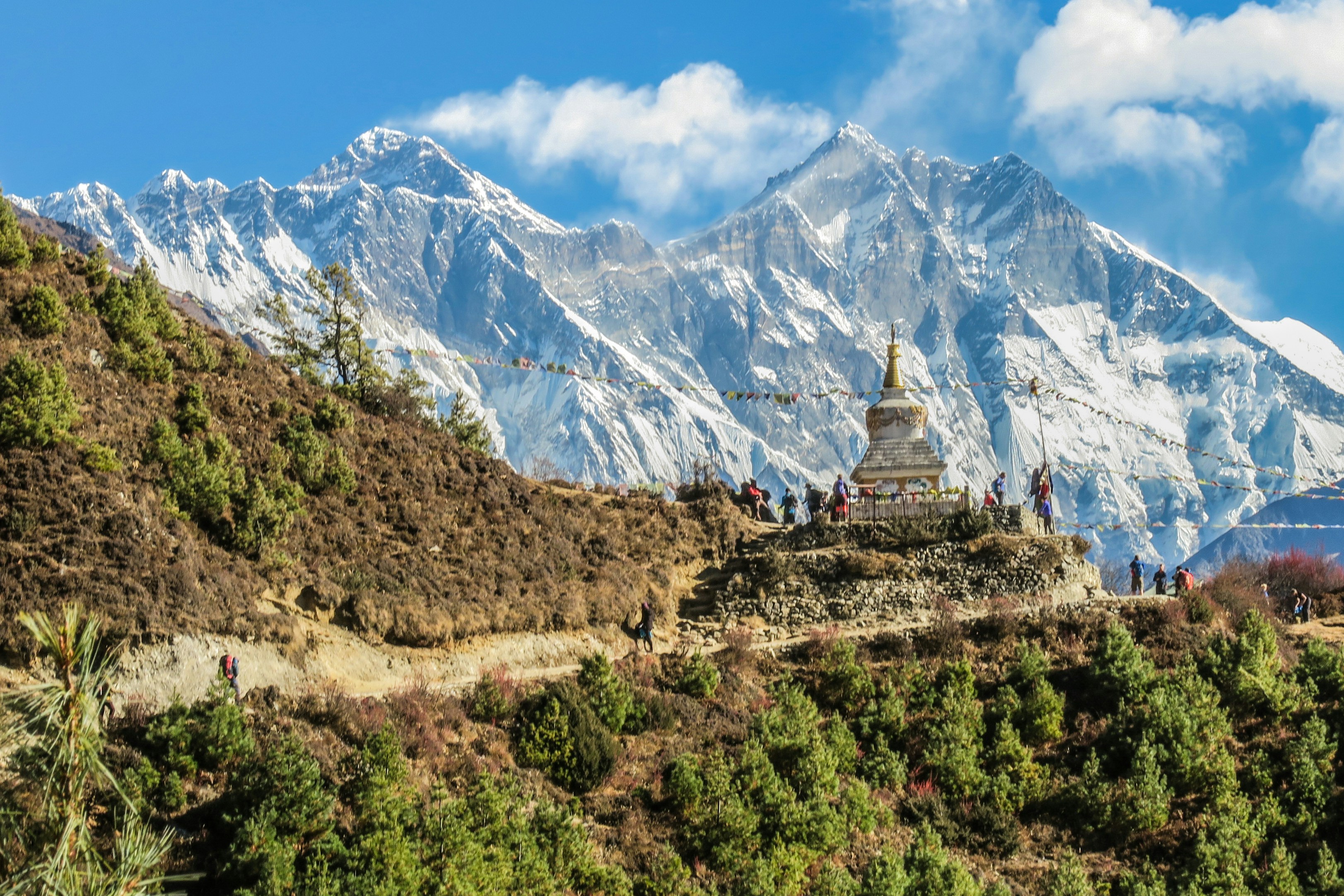

💡 Our principle: The mountains cannot be controlled. What we can control is how prepared we are to respond to them.
⚠️ Two Broad Sources of Risk on a Himalayan Trek
When we think about trekking safety, we broadly divide the challenges into two categories:
- 🌄 Natural hazards: Weather, terrain, rockfall, landslides, avalanches, river conditions, snow and other environmental factors.
- 🧠 Human factors: Poor decisions, overconfidence, inadequate preparation, ignoring symptoms, inappropriate pacing, or continuing when conditions are no longer safe.
We cannot guarantee a completely risk-free Himalayan trail. No responsible mountain organisation should.
What we can do is reduce avoidable risk through knowledge, planning, experienced leadership and disciplined decision-making.
For natural hazards, knowledge of the region, terrain, weather patterns, route characteristics and seasonal conditions helps determine route selection, itinerary design and the type of technical equipment required.
For human factors, the answer is often simpler — preparation, awareness and humility.
The mountains do not care how fit someone is in a gym, how many followers they have, or how badly they want to reach a summit.
At altitude, overconfidence can become a safety problem very quickly.
🧭 Safety Starts Before the Trek Begins
One of the biggest misconceptions about trekking safety is that it begins when the trekker reaches the trailhead.
For us, it begins much earlier.
Route selection, season selection, trek grading, itinerary design, staff allocation, equipment planning and participant preparation are all part of the safety process.
A trek that is technically possible under ideal conditions may not be the right trek for every participant, every season or every weather window.
This is why choosing the right Himalayan trek is itself a safety decision.
👉 Choosing your trek carefully matters: Choosing the Right Himalayan Trek – A Strategic Guide for Safety, Experience & Growth.
👨🏔️ 1. Trek Leader & Guide – Our First Priority
If there is one part of a Himalayan trekking operation that we consider more important than all the equipment hanging in a gear room, it is the person leading the team in the mountains.
Your trek leader or guide is the captain of the team. They are responsible not only for navigation and itinerary execution, but also for observing the group, understanding changing trail conditions, coordinating staff and making decisions when circumstances change.
Equipment can support a mountain team. A trained leader is the person who knows when and how that equipment should actually be used.
🎓 Our Guide Selection & Training Approach
We select trek leaders and guides with formal mountaineering training. Our preferred benchmark is completion of a Basic Mountaineering Course (BMC) from a government-recognised mountaineering institute with an A grade, or an Advanced Mountaineering Course (AMC).
Mountaineering training provides a foundation in mountain movement, terrain awareness, technical skills and the practical realities of operating in demanding environments.
We also look for Wilderness First Responder (WFR) training from a recognised institute. Where a newer member does not yet have external WFR certification, we provide internal training so that the person becomes familiar with our equipment, procedures and the practical handling of situations that may arise during a trek.
Experience matters just as much as certification.
Newer guides and trek leaders are therefore assigned to easier-grade treks first. They gain field experience and learn the operational side of trekking before taking responsibility for more demanding routes.
💡 Certification gives a foundation. Experience teaches you how to apply it when the mountain does not behave according to plan.
🧠 2. Acclimatization Is a Safety Protocol, Not a Formality
One of the most important health-related considerations in Himalayan trekking is altitude sickness, including Acute Mountain Sickness (AMS).
As altitude increases, the availability of oxygen decreases. Your body needs time to adapt to the changing environment. Acclimatization is therefore not something that should be treated as an inconvenience or simply another day added to an itinerary.
It is part of mountain safety.
Symptoms such as headache, nausea, dizziness, unusual fatigue, loss of appetite or disturbed sleep should never simply be dismissed because someone is otherwise fit.
Altitude illness can affect people regardless of their fitness level or previous trekking experience.
Our trek leaders and guides therefore monitor participants and follow internal processes designed to help participants acclimatize appropriately and to identify when someone is not adapting properly.
Where health concerns arise, vital signs may be monitored closely and the trek leader makes decisions based on the participant's condition, the altitude, the environment and the overall circumstances.
👉 Read our detailed guide on AMS: Acute Mountain Sickness (AMS) – Symptoms, Prevention & What Trekkers Need to Know.
👉 You can also read: Staying Fit & Healthy on a Himalayan Trek – Complete Guide.
🚦 3. Knowing When to Stop Is Also a Sign of Good Trekking
There is a dangerous idea in adventure travel that turning back means failure.
We don't believe that.
There is a point where challenging yourself stops being an adventure and starts becoming an unnecessary risk.
Our operational protocols include thresholds for deciding when a participant can continue, when they need to stop, and when the situation requires a different response. These considerations apply both to health-related risks and natural hazards.
That means a trek leader may sometimes make a decision that a participant does not personally want to hear.
The summit can wait.
The pass can wait.
The mountain will still be there.
Your family and loved ones are waiting for you to return.
❤️ Our philosophy is simple: challenging yourself makes sense only while you remain safe enough to return home. You can always come back to the mountains under better conditions.
This is one of the most important differences between responsible trekking and simply trying to complete an itinerary at any cost.
⛺ 4. Camping, Medical & Safety Equipment – Our Second Priority
Good equipment cannot replace good judgement. But the right equipment, properly selected, tested and maintained, is an essential layer of protection in the Himalayas.
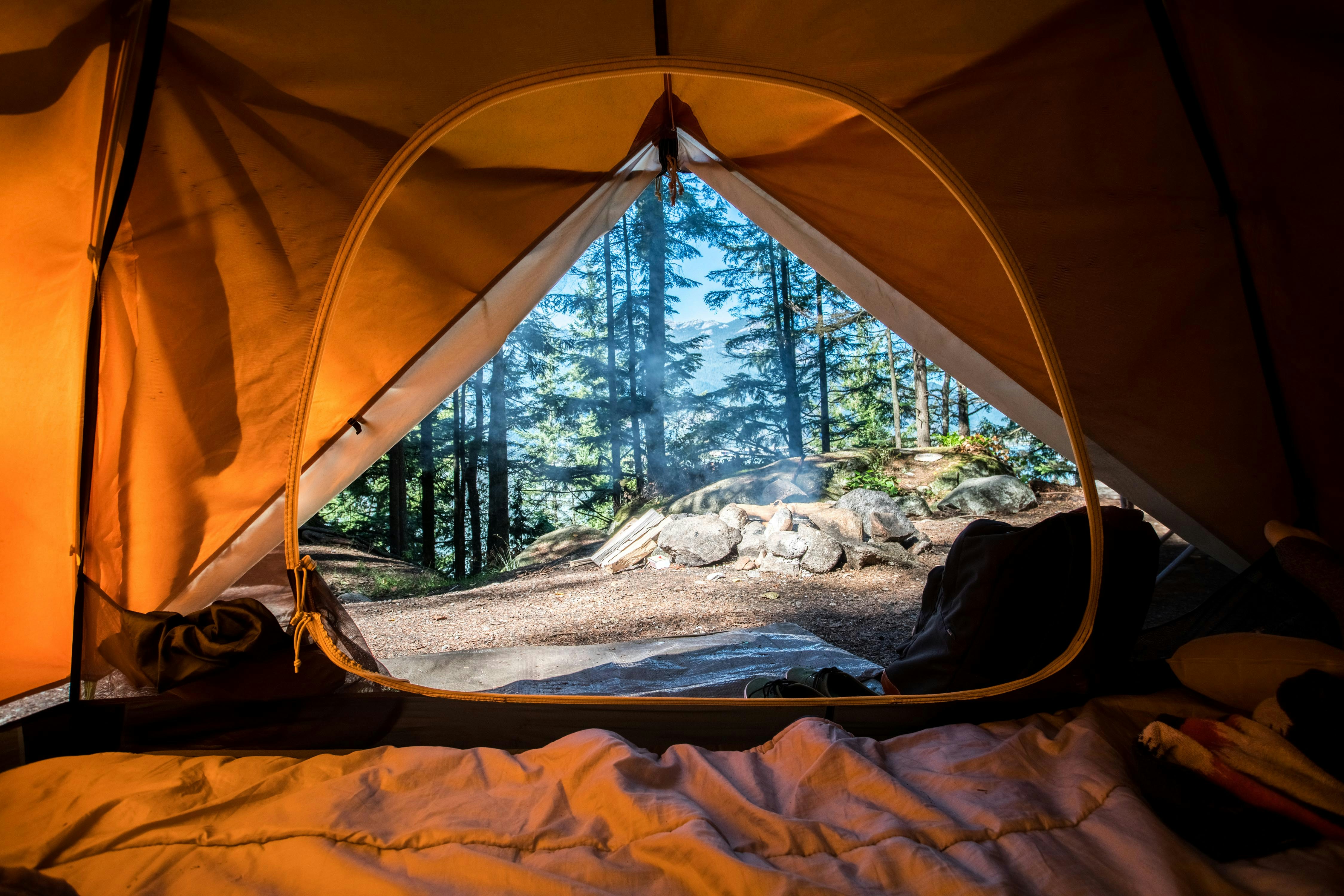
Our camping equipment is checked before departure and approved by the trek leader or guide. This includes items such as:
- ⛺ Tents
- 🛏️ Sleeping bags
- 🛌 Sleeping mats and mattresses
- 🧥 Weather-appropriate protective equipment
The trek leader also coordinates with cooks, porters and other support staff to ensure that the equipment required by the team is properly prepared before departure.
🧗 5. Technical & Rescue Equipment Depends on the Trek
Not every Himalayan trek requires the same technical equipment.
A straightforward trail does not need to be treated like a technical mountain expedition simply to create an appearance of preparedness. At the same time, a route involving steep terrain, snow, exposed sections, glacier travel or other technical challenges requires the right equipment and competent people to use it.
Depending on the trek, technical equipment may include items such as:
- 🪢 Ropes
- 🪓 Ice axes
- 🥾 Crampons or traction equipment
- 🦵 Gaiters
- ⛑️ Helmets
- 🧗 Harnesses
Our technical gears are selected according to the route and its requirements. When purchasing technical and safety equipment, we look for the appropriate CE conformity marking and, where applicable, the UIAA Safety Label or relevant UIAA standard. These markings and standards provide an important indication that the equipment has been assessed against recognised safety requirements for its intended use. We check these markings and the manufacturer's specifications before selecting equipment for our treks.
Rescue-specific equipment such as portable oxygen and a stretcher forms another layer of preparedness. The exact quantity and configuration can vary according to the nature of the trek.
But equipment itself does not perform a rescue.
People do.
The trek leader or guide, together with the support team, needs to understand the situation, select the appropriate response and use the available equipment correctly.
🩹 6. First Aid & Altitude-Specific Medical Preparedness
Every trek leader or guide carries an extensive first-aid kit containing routine first-aid supplies as well as emergency medications relevant to the conditions encountered during Himalayan trekking.
This does not mean that a trek is a substitute for medical care.
Rather, first aid provides the mountain team with the ability to respond to immediate problems while deciding what needs to happen next.
That distinction matters in remote environments.
The goal is not to pretend that every medical problem can be treated on the trail. The goal is to recognise problems early, respond appropriately and avoid allowing a manageable situation to become an emergency.
👉 For a broader understanding of health risks during a trek: Advanced Health & Survival Guide for Himalayan Treks.
📋 7. Equipment Is Checked Before We Give the Trek a Green Signal
Safety is also about process.
Before departure, our operations team ensures that the camping, medical and safety equipment required for the particular trek has been documented and reported to the Operations Manager.
The trek should not simply leave because the date has arrived.
There is a pre-departure process through which the required equipment and operational readiness are checked before the trek receives its internal green signal.
This may sound like a small administrative detail, but in mountain operations, good documentation and preparation prevent avoidable mistakes.
👥 8. Small Groups Are Part of Our Safety Philosophy
We keep our fixed-departure groups deliberately small.
Our fixed-departure group size is capped at a maximum of 8 participants.
For us, this is not only about creating a more personal trekking experience. Small groups also allow the trek leader and support team to observe participants more closely and coordinate movement more effectively.
A group of eight people behaves very differently on a mountain compared with a large group moving through the same terrain.
Small groups can mean:
- 👀 Better individual observation
- 🧭 Easier coordination
- 🗣️ Clearer communication
- ⏱️ More manageable movement between sections
- ❤️ More individual attention to participants
This is one reason our philosophy of small-group trekking is closely connected to our wider approach to safety and individual care.
📡 9. Communication in the Himalayas Is Not as Simple as Carrying a Device
Communication is an important part of mountain operations, but Himalayan conditions make communication very different from what most trekkers experience in cities.
Most trekking routes have limited or no mobile network coverage. Charging facilities can also be unavailable for extended periods.
We therefore do not believe that carrying a communication device automatically makes a trek safer.
Our fixed-departure groups are small and our operations are structured around close coordination between the trek leader, support staff and backend operations team. On many running treks, the entire team moves together from one location to the next.
Walkie-talkies can be useful in some operational environments, but in the Himalayas their usefulness can be limited by terrain, range, battery life and charging availability.
A satellite phone can offer a different level of communication capability, but satellite communication equipment is subject to regulations in India, particularly in sensitive border regions.
Therefore, our approach is not to depend blindly on a communication device.
Planning, coordination, route knowledge and experienced leadership remain the foundation.
🌦️ 10. Weather & Natural Hazards: The Mountain Always Gets the Final Say
Even the best-prepared trek cannot eliminate natural hazards.
Weather can influence visibility, temperature, trail conditions, river crossings, snow conditions and the overall safety of a route.
Similarly, rockfall, landslides and avalanches can create hazards that are impossible to eliminate completely.
This is why responsible Himalayan trekking requires continuous assessment rather than a simple checklist completed before departure.
The question is not only:
“Was this route safe when we planned the trek?”
The more important question is:
“Is this route safe under the conditions we are facing right now?”
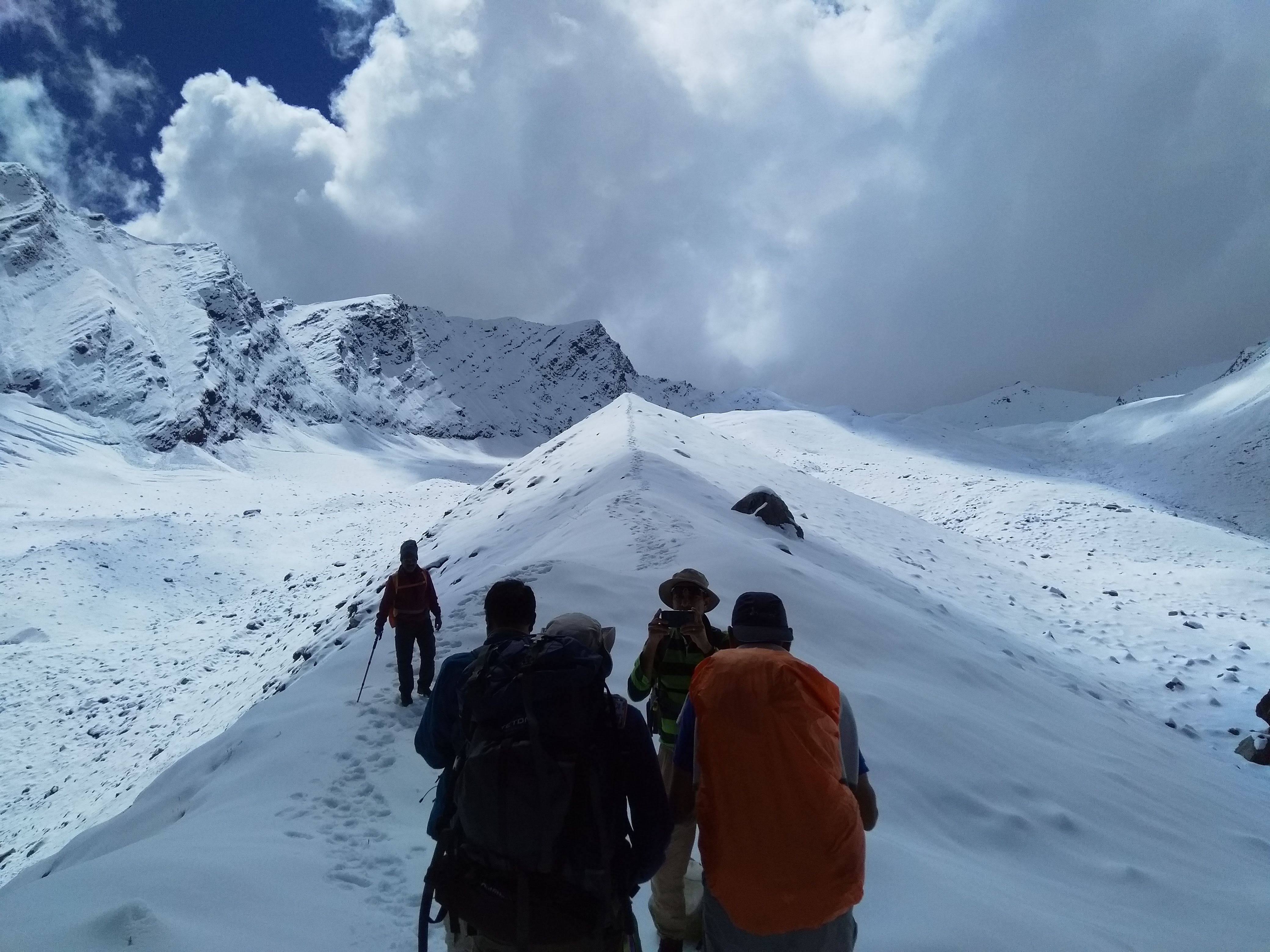
That is why experienced mountain teams continually reassess conditions rather than treating the original itinerary as something that can never be changed.
🧠 11. The Most Important Safety Equipment Is Still Human Judgement
It is tempting to think of safety in terms of equipment.
How many oxygen cylinders?
How many ropes?
Which tent?
Which crampon?
Which communication device?
These are all legitimate questions.
But there is a question that comes before all of them:
Who is making the decision when something goes wrong?
A piece of equipment can only be useful if the person carrying it understands when to use it, how to use it and what problem it is actually solving.
The same applies to acclimatization, weather assessment, pacing and emergency response.
That is why we place the trek leader and guide above equipment in our safety hierarchy.
🏔️ Our safety hierarchy is simple: experienced leadership first, appropriate equipment second, communication and coordination third — all supported by preparation and disciplined decision-making.
🛑 12. We Do Not Believe in Pushing a Trekker to Prove a Point
There is a difference between encouraging someone through a difficult moment and pushing someone beyond a reasonable safety threshold.
Trekking naturally involves discomfort. Tired legs, cold mornings, steep climbs, difficult weather and long walking days are all part of the experience.
But discomfort should not automatically be confused with danger.
Our trek leaders are expected to distinguish between the two and make decisions based on the participant's condition and the conditions around them.
If someone is not acclimatizing properly, if weather deteriorates, if terrain becomes unsafe or if continuing creates an unacceptable level of risk, turning around can be the correct decision.
We would rather have a trekker disappointed about missing a summit than have a preventable emergency on our hands.
🎒 13. Trekkers Are Also Part of the Safety System
Safety cannot be outsourced entirely to a trek leader.
Every participant has a role to play.
- 🥾 Arrive physically prepared
- 💧 Stay adequately hydrated
- 🍲 Eat properly during the trek
- 😴 Get sufficient rest
- 🧥 Dress appropriately for the conditions
- 🗣️ Report unusual symptoms early
- 👂 Follow instructions from the trek leader and guide
- 🚫 Do not hide symptoms because you are afraid of being asked to stop
- 🧠 Do not let ego override mountain judgement
One of the most dangerous things a trekker can do is hide a problem because they are worried about slowing the group down.
If something feels wrong, tell your trek leader early.
Early information gives a mountain team more options.
🧗 14. Safety Does Not Mean Removing the Adventure
Responsible trekking should not turn the Himalayas into a controlled amusement park.
The uncertainty, remoteness, physical challenge and changing conditions are part of what makes mountain travel meaningful.
Our goal is not to remove every element of challenge.
Our goal is to ensure that the challenge is approached with knowledge, preparation, experience and respect.
There is a huge difference between accepting the inherent uncertainty of the mountains and taking unnecessary risks.
The first is adventure.
The second is poor judgement.
🌄 The Planethimalayas Safety Philosophy
After more than two decades of experience in the Himalayas, our approach has become very simple.
We do not promise a risk-free mountain.
We prepare for the mountain that actually exists.
That means:
- 👨🏔️ Experienced and appropriately trained trek leaders and guides
- 🎓 Mountaineering and wilderness first-response training
- 🧠 Structured acclimatization and health monitoring
- 🚦 Clear thresholds for continuing or stopping
- ⛺ Tested camping equipment
- 🩹 Comprehensive first-aid preparedness
- 🧗 Trek-specific technical equipment
- 🛟 Rescue equipment appropriate to the route
- 👥 Small fixed-departure groups
- 📋 Pre-departure equipment and operational checks
- 📡 Practical communication and coordination planning
- ❤️ A willingness to turn back when conditions demand it
And perhaps most importantly, we believe that the person leading the trek is the first and most important layer of safety.
Because when the weather changes, when a participant starts feeling unwell, when a trail looks different from what was expected, or when the original plan no longer makes sense, there is no manual that can answer every question.
Someone has to make the call.
That is why we put so much importance on the people we trust to lead our trekkers into the Himalayas.
🏔️ More Than Just a Trek
For us, safety is not something added to a trek after the itinerary has been designed.
It is part of the trek from the very beginning.
From selecting a route and choosing the right season, to preparing the team, checking equipment, monitoring acclimatization and knowing when to turn back — every decision contributes to the safety of the journey.
The Himalayas will always remain wild, powerful and unpredictable.
We would not want them any other way.
Our responsibility is not to make the mountains harmless.
Our responsibility is to help you experience them with preparation, respect, awareness and the right people around you.
That is what we mean when we say:
🏔️ More Than Just A Trek.
📚 Prepare Before You Trek
Safety begins before you reach the mountains. We recommend every trekker spend time understanding their route, preparing physically, learning about altitude and packing appropriately.
👉 Start here: Getting Prepared for a Trek in the Himalayas
👉 Understand altitude: AMS – Acute Mountain Sickness
👉 Learn how to stay healthy: Staying Fit & Healthy on a Himalayan Trek
👉 Pack correctly: Complete Himalayan Trek Packing List
👉 Pack efficiently: How to Pack Your Backpack for a Himalayan Trek
👉 Understand deeper health risks: Advanced Health & Survival Guide for Himalayan Treks
❓ FAQs – Himalayan Trekking Safety
- Is trekking in the Himalayas safe?
Himalayan trekking involves inherent natural and environmental risks, so no responsible operator can promise a completely risk-free trek. Safety depends on appropriate route selection, preparation, experienced leadership, acclimatization, equipment, weather assessment and good decision-making. - What is the most important part of trekking safety?
We consider an experienced and appropriately trained trek leader or guide the first line of defence. Equipment is important, but it is the mountain team's judgement and ability to use that equipment correctly that makes the difference. - Can fit people still get Acute Mountain Sickness?
Yes. Fitness does not make someone immune to altitude illness. Acclimatization and gradual adaptation to altitude are critical, and trekkers should report symptoms early. - What happens if someone does not acclimatize properly?
The trek leader assesses the participant's condition and follows the operational protocols for health and altitude-related concerns. Depending on the circumstances, this can include rest, closer monitoring, stopping further ascent or changing the plan. - Do Planethimalayas treks carry emergency equipment?
Our treks are equipped according to the requirements of the route. Rescue-specific equipment such as portable oxygen and stretchers forms part of our emergency preparedness, while technical equipment is selected according to the terrain and demands of the particular trek. - Why does Planethimalayas keep its groups small?
Our fixed-departure groups are capped at a maximum of 8 participants. Small groups allow better coordination and more individual attention while also supporting our philosophy of personal care on the trail. - What if the weather or trail conditions become unsafe?
Mountain conditions can change and the original itinerary may need to be adapted. Our approach is to assess the actual conditions and make the safest reasonable decision rather than treating the planned itinerary as more important than the team. - Will the trek always continue if I want to push ahead?
No. The trek leader has responsibility for the safety of the team and may decide that a participant should stop, turn around or that the group should alter its plan when conditions require it. - What should trekkers do if they feel unwell?
Tell your trek leader or guide as early as possible. Hiding symptoms can reduce the team's ability to respond before a manageable problem becomes more serious. - Does carrying more safety equipment automatically make a trek safer?
Not necessarily. Equipment needs to be appropriate to the terrain and usable by trained people. Good preparation, experienced leadership, route knowledge, acclimatization and decision-making remain fundamental.
📞 Ready to Trek Responsibly?
Explore our Upcoming Treks or contact Planethimalayas if you want help choosing a trek that matches your experience, fitness and goals.
The Himalayas are waiting.
Come prepared. Come respectful. And most importantly, come back.
